Clubbell, Steel Mace, and Indian Club Training on the Upper West Side
Circular movement. Offset loading. Rotational strength through tools that most gyms don't own and most trainers have never touched. Clubbell, steel mace, and Indian club training at Momentum Fitness is where these tools started for us. The gym's roots are in unconventional strength training, and while we've expanded into many methods since then, the tools that gave us our name are still on the training floor and still central to what we do. Three trainers with dedicated credentials, a full inventory of CST clubbells, steel maces, and Indian clubs, and personal training that takes you from your first swing to complex flows.
What Clubbell, Steel Mace, and Indian Club Training Is
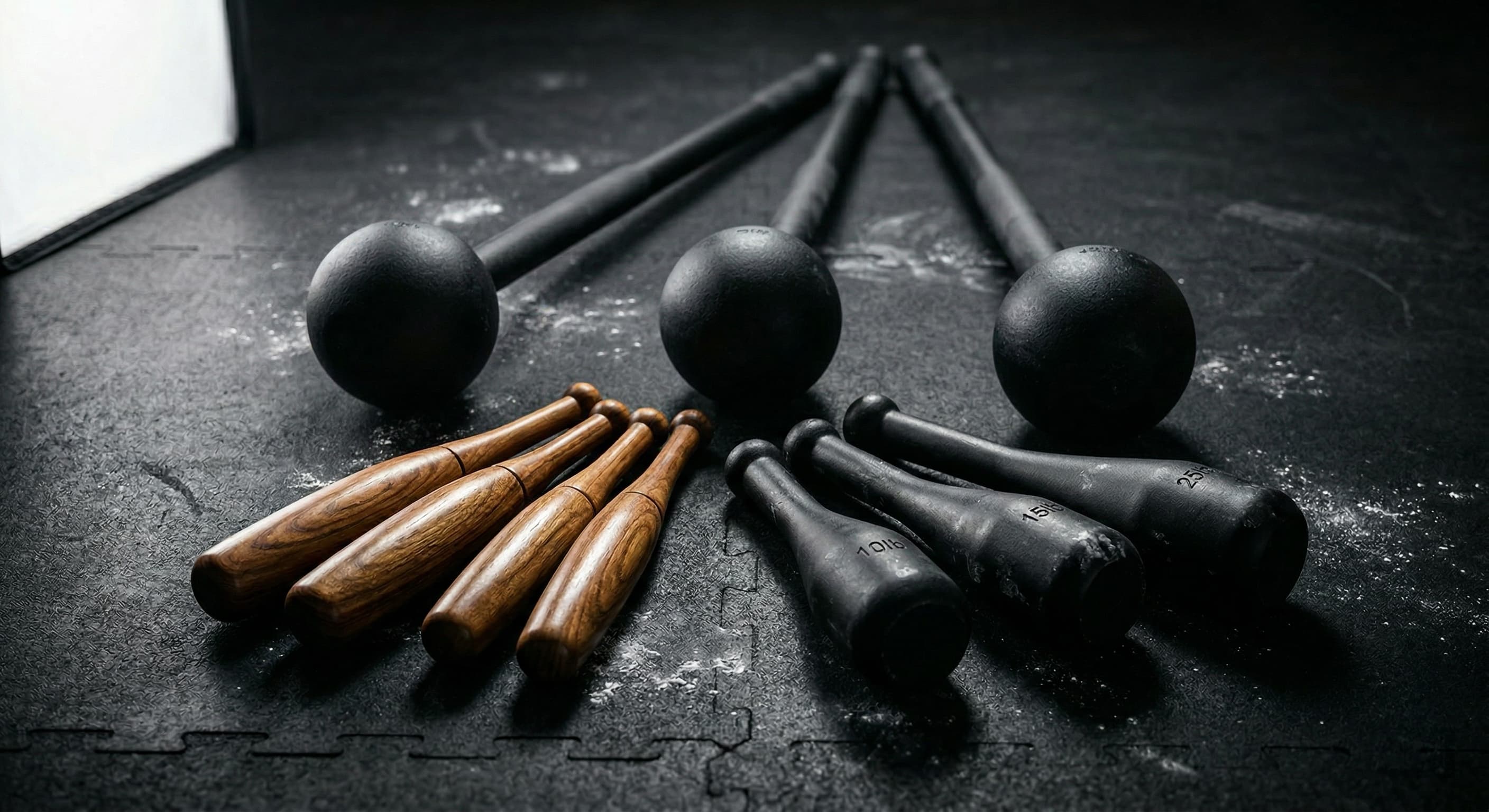
These three tools share a common principle: the weight is offset from your grip, which forces your body to stabilize, rotate, and control momentum through every repetition. That offset loading is what makes them fundamentally different from conventional free weights. The long lever arms create a leverage disadvantage that forces stabilizer muscles to work harder than they would under a balanced load. Instead of lifting in straight lines, you're moving through arcs, circles, and spirals that challenge your shoulders, core, and grip in ways that barbells and dumbbells don't reach.
Indian clubs are the lightest of the three, typically weighing one to five pounds. They originated with Persian wrestlers centuries ago, were adopted by the British military for shoulder conditioning, and are now used primarily for shoulder rehabilitation, prehab, and joint health. The circular club swinging patterns create traction through the shoulder joint, which builds rotator cuff endurance and restores range of motion without loading the joint under compression. Jose Araujo holds the DV8 Indian Clubs certification, one of the few formal credentialing systems for this tool.
Steel maces (also called macebells) sit in the middle of the spectrum. The weight is concentrated at one end of a long lever, which creates an extreme offset load that your core and shoulders have to manage through every movement. The steel mace 360, where the mace travels in a full circle behind your head, is the foundational movement. Its companion, the 10-to-2, trains the same rotational path at a shorter range. Both are among the most effective rotational and anti-rotational core exercises available. Mace flow sequences chain multiple movements together into continuous patterns that build coordination, endurance, and rotational power. Momentum hosted the Mace Fit Level 1 Coach Certification on-site in January 2026.
Clubbells are the heaviest and most demanding of the three. Developed through the Circular Strength Training (CST) system, clubbells range from five to forty-five pounds and train rotational power, shoulder strength, and grip endurance at intensities that Indian clubs and maces can't match. The thick handles and offset mass build forearm and grip strength as a byproduct of every exercise. Where Indian clubs restore range of motion and maces build rotational endurance, clubbells develop the raw rotational power that carries over into sports, martial arts, and heavy lifting.
The three tools form a spectrum. A session might start with light Indian clubs to warm up the shoulders and groove circular patterns, progress to steel mace flows for rotational conditioning, and finish with heavier clubbell work for strength. That progression from rehab-weight to power-weight is one of the reasons these tools work so well together in a single training program.
Who Clubbell, Steel Mace, and Indian Club Training Is Best For
You're recovering from a shoulder injury or finishing physical therapy and need to rebuild range of motion and rotator cuff endurance. Indian clubs are one of the most effective tools for shoulder rehabilitation because the circular patterns create joint traction under light load, which restores mobility without the compressive stress that traditional shoulder exercises create.
You sit at a desk all day and your shoulders are locked up. The overhead circular patterns in Indian club and mace work open the thoracic spine and shoulder girdle in ways that static stretching can't match. Clients who've spent years with rounded shoulders and tight pecs often notice a difference in their posture within the first few sessions.
You train boxing and martial arts and want more rotational power. Every strike, kick, and throw is a rotational movement. Steel mace and clubbell training builds the core rotation, hip drive, and shoulder stability that power those movements, which is why these tools have been used by combat athletes for centuries.
You've been lifting for years and you want something that challenges you in a completely different way. If your training has been limited to sagittal plane movements (forward and back, up and down), the circular and transverse plane loading of these tools exposes weaknesses you didn't know you had. The coordination demands alone will humble experienced lifters.
You're drawn to the flow state that complex movement creates. Mace flows and clubbell combinations require total concentration. The patterns are intricate enough that your mind can't wander, which produces the same absorbed focus that martial arts, dance, and musical performance create. For clients who find repetitive gym work mentally numbing, this is the antidote.
What Clubbell, Mace, and Indian Club Training Does for You
Clients who start training with these tools typically notice improved shoulder range of motion, reduced shoulder pain, stronger grip, and better thoracic rotation within the first two to four weeks. The early changes come from the circular loading patterns that move your shoulders through ranges they rarely visit in conventional training. Most clients also report that the focus required for the movement patterns provides immediate mental clarity, similar to the effect that martial arts or yoga practice creates.
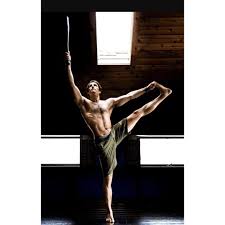
Complex circular patterns under load train your brain as much as your body. Learning a multi-step clubbell flow or chaining Indian club sequences into continuous movement builds coordination, timing, and spatial awareness that repetitive gym exercises never touch. That neuroplasticity demand is why clients describe these sessions as the most mentally engaging training they've done. The flow-state focus that complex tool work produces, where your mind can't wander because the pattern requires total concentration, keeps experienced movers engaged long after they've mastered the basics. JJ Biasucci draws on 30 years of martial arts alongside his clubbell, Indian club, animal locomotion, and qigong practice to build sessions that connect the tools to broader movement patterns. His background as a Yoga Teacher Trainer with over 2,000 hours of yoga training shapes how he sequences movements and progresses complexity over time.
Jose Araujo (DV8 Indian Clubs, NASM-CES) combines his Indian club specialization with corrective exercise credentials. That pairing is rare and directly useful: clients dealing with shoulder pain, rotator cuff issues, or post-surgical restrictions get Indian club programming that's informed by a corrective exercise assessment rather than a generic protocol. Jose's 25 years of martial arts experience also means he can connect the tool work to combat applications for clients who want that dimension.
A 2026 randomized controlled trial in BMC Sports Science, Medicine and Rehabilitation found that 12 weeks of mace training significantly improved grip strength, shoulder flexibility, and upper extremity stability in elite wrestlers compared to a control group. The improvements were large across all three measures, which supports what trainers using these tools have observed for years: the offset loading and circular movement patterns build functional strength that conventional resistance training doesn't replicate.
How Momentum Delivers Clubbell, Steel Mace, and Indian Club Training
Personal training for clubbell, steel mace, and Indian club work is one-on-one because these tools demand it. The circular movement patterns, grip positions, and shoulder mechanics involved require real-time coaching and correction that a group class format can't provide. Your trainer assesses your shoulder mobility, movement history, and goals, then builds a program using the tools and progressions that match where you are right now.
A typical session might start with Indian club circles to warm up the shoulders and groove the rotational patterns, move into steel mace 360s and flow sequences for conditioning, then progress to heavier clubbell work for strength. Your trainer adjusts the tool selection and loading based on your session goals, whether that's shoulder rehabilitation, rotational power development, or learning complex flows.
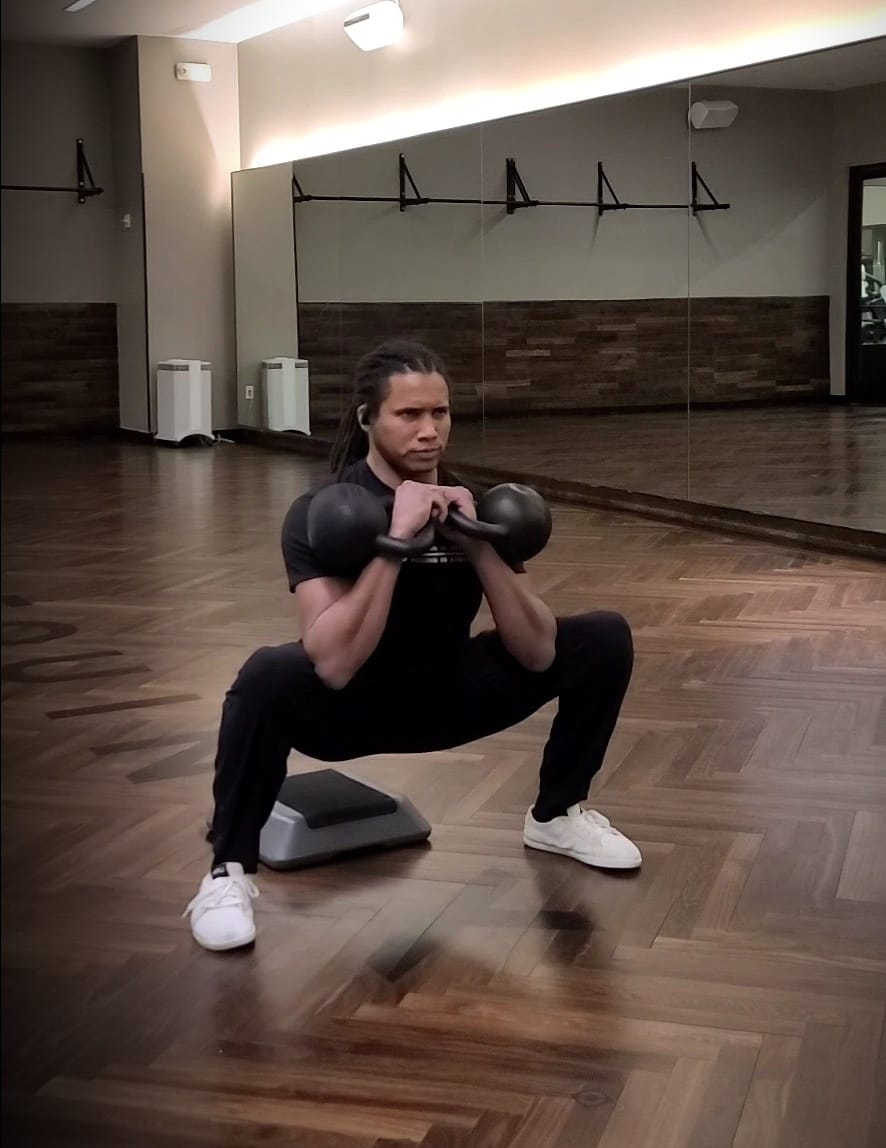
JJ Biasucci is Momentum's most experienced practitioner with these tools, drawing on three decades of martial arts, movement practice, and complex tool work. Jose Araujo brings dedicated DV8 Indian Clubs certification alongside his corrective exercise background. Marco Guanilo's training through the CST and TACFIT lineage rounds out the coaching staff, with a movement methodology background that connects clubbell training to the broader Circular Strength Training system these tools were developed within.
Momentum doesn't just train with these tools. The gym hosts the certifications that teach them. The Indian Clubs & Mace Swinging Workshop (December 2025) and the Mace Fit Level 1 Coach Certification (January 2026) were both held on-site, which means the trainers here aren't just users of these tools. They train in the same space where other coaches come to learn them.
No membership required. Buy a personal training package, train at whatever frequency works for your schedule, and share unused sessions with a friend or family member. Packages don't expire.
Your Clubbell, Steel Mace, and Indian Club Trainers
Frequently Asked Questions
What is clubbell training?
Clubbell training is a strength and conditioning method built on the Circular Strength Training (CST) system. Clubbells are weighted clubs with thick handles and offset mass that you swing, press, and rotate through circular patterns. The offset loading forces your core, shoulders, and grip to stabilize through every movement, which builds rotational strength and joint resilience that conventional weight training doesn't develop. Clubbells range from five to forty-five pounds and progress from basic two-hand movements to complex single-arm flows.
What are the benefits of steel mace training?
Steel mace training builds rotational core strength, grip endurance, and shoulder stability through offset loading and circular movement patterns. The long lever arm with weight concentrated at one end creates a rotational demand that fires your obliques, serratus, and deep core stabilizers throughout every repetition. The steel mace 360 alone trains core rotation, shoulder mobility, and grip strength in a single continuous movement. Research has shown that mace training significantly improves grip strength, shoulder flexibility, and upper extremity stability compared to conventional resistance training.
What's the difference between a clubbell and a kettlebell?
A clubbell is designed for circular, rotational movements. The weight sits at the end of a long handle, creating an offset load that your body has to control through arcs and spirals. A kettlebell's center of mass is closer to your grip, which makes it better suited for linear power movements. The two tools complement each other but train different movement patterns and different demands on the body. Momentum offers dedicated kettlebell training alongside its clubbell programming.
Are steel maces and Indian clubs good for shoulder health?
Yes. Indian clubs are one of the most effective tools for shoulder rehabilitation and prehab because the light, circular swinging patterns create traction through the shoulder joint. That traction decompresses the joint and builds rotator cuff endurance without the compressive loading that traditional shoulder exercises create. Steel maces and clubbells continue that shoulder work at higher intensities, building the rotational stability and strength around the joint that prevents future injuries. For clients with shoulder pain, rotator cuff issues, or post-surgical restrictions, a program that starts with Indian clubs and progresses to heavier tools as the shoulder strengthens is one of the most effective paths to what trainers call "bulletproof shoulders."
Is mace or clubbell training good for martial artists?
These tools were originally developed by combat athletes. Persian wrestlers trained with heavy clubs (the ancestors of modern macebells) to build the rotational power, grip endurance, and shoulder resilience that grappling and striking demand. Steel mace and clubbell training develops the core rotation and hip drive that power punches, kicks, and throws. Several of Momentum's trainers who coach with these tools also hold martial arts credentials, so they can connect the tool work directly to combat applications.
Do I need experience to start training with clubbells or maces?
No. Every client starts from wherever they are. If you've never held a mace or clubbell, your trainer begins with the basic grip, posture, and movement patterns before anything else. Indian clubs are light enough that most clients can start swinging on day one, and the skills build progressively from there. The first session is complimentary for new clients, so you can try it before committing to a package.
What weight should I start with for mace or clubbell training?
Indian clubs start at one to two pounds and most clients can begin there immediately. For steel maces, most men start around 10 to 15 pounds and most women around 7 to 10 pounds. Clubbells typically start at 5 to 15 pounds depending on your shoulder strength and training history. Your trainer selects the right weight for your first session based on your assessment. The key is starting lighter than you think you need to. These tools load your tendons, ligaments, and internal stabilizing muscles in ways that conventional weights don't, so progressive conditioning matters more than raw strength.
What certifications should a clubbell or mace trainer have?
Look for trainers with dedicated credentials in these specific tools, not just a general personal training certification. DV8 certifies Indian club and related tool practitioners. Mace Fit certifies steel mace coaches through a structured system of movements, progressions, and programming. CST (Circular Strength Training) is the system behind clubbell training methodology. Beyond certifications, depth of practice matters: years of personal training with these tools, martial arts background (where many of these tools originate), and the ability to coach complex movement patterns in real time. Momentum's trainers hold these specialized credentials alongside their personal training certifications.
What muscles do clubbells, maces, and Indian clubs work?
All three tools train the body as a connected system rather than isolating individual muscles. The primary emphasis is on rotational core strength (obliques, transverse abdominis, serratus anterior), shoulder stability (rotator cuff, deltoids, scapular stabilizers), and grip/forearm endurance. The offset loading also demands significant work from the lats, traps, and deep spinal stabilizers that maintain posture and alignment through every circular movement. Indian clubs emphasize shoulder endurance and joint health at lighter loads. Steel maces increase the core and grip demands. Clubbells add rotational power and full-body strength at the heaviest loads.