Corrective Exercise on the Upper West Side
Your shoulder clicks every time you reach overhead. Your lower back tightens up after an hour at your desk. You've tried stretching, foam rolling, maybe even a few rounds of physical therapy. But the problem keeps coming back because nobody figured out why it started. That's what corrective exercise personal training is built to solve.
What Corrective Exercise Is and Why It Works

Corrective exercise is a systematic approach to identifying and fixing the movement dysfunctions that cause pain, stiffness, and recurring injuries. It's not a workout in the traditional sense. It's a process: find what's not moving correctly, figure out why, and rebuild the pattern from the ground up.
The method follows NASM's Corrective Exercise Continuum, a four-phase protocol used by certified corrective exercise specialists (NASM-CES) worldwide. First, inhibit the overactive muscles that are pulling your body out of alignment. Then lengthen them to restore range of motion. Next, activate the underactive muscles that stopped doing their job. Finally, integrate everything into functional movement patterns so the correction sticks under load, under fatigue, and in real life.
Before any of that starts, your trainer runs a movement screening called the Functional Movement Screen (FMS), a series of seven movement patterns that reveal exactly where your compensations are. The FMS doesn't guess. It shows which joints are restricted, which muscles are firing out of sequence, and where your kinetic chain breaks down. A 2018 study in the Journal of Exercise Rehabilitation found that corrective exercise programs based on FMS results significantly improved movement quality in firefighters after targeted intervention. The research lines up with what Momentum's trainers see every week: screen first, correct what the screen reveals, then build strength on top of a foundation that actually works.
What makes corrective exercise different from general personal training is the diagnostic layer. A good trainer doesn't just give you exercises. A corrective exercise specialist identifies the root cause of a compensation pattern, whether it's a postural compensation from years of desk work, a muscle imbalance from repetitive training, or a neuromuscular control deficit that a static assessment reveals.
Who It's Best For
You work at a desk eight or more hours a day and you can feel it. Your shoulders round forward, your neck is tight by noon, and your hip flexors haven't fully lengthened since your last vacation. Upper Cross Syndrome and Lower Cross Syndrome are textbook results of prolonged sitting, and corrective exercise is built to reverse them. Corrective exercise for desk workers addresses the posture-related pain that no amount of desk ergonomics alone can fix.
You finished physical therapy and you were discharged "good enough," but you're not back to where you were. Post-rehab conditioning bridges the gap between clinical PT and full-strength training. Your corrective exercise specialist picks up where your physical therapist left off and builds you back to moving without restriction.
You train consistently but something always hurts. Your left shoulder catches during presses. Your knee tracks inward during squats. Your lower back compensates for weak glutes on every deadlift. These are compensation patterns, and they don't resolve by pushing through them. They resolve by identifying the underlying imbalance and reprogramming the movement.
You're over 50 and you want to stay active without the nagging joint pain that seems to accumulate with each passing year. Corrective exercise focuses on maintaining range of motion, joint stability, and neuromuscular control, the three things that decline fastest with age and respond best to targeted work. It's injury prevention built into every session.
What Results to Expect

Clients working through a corrective exercise program typically notice reduced pain and improved range of motion within the first few weeks. That's because inhibiting overactive muscles and activating underactive ones produces changes quickly once the right muscles start firing again. The goal is pain-free movement, and most clients start experiencing it sooner than they expect.
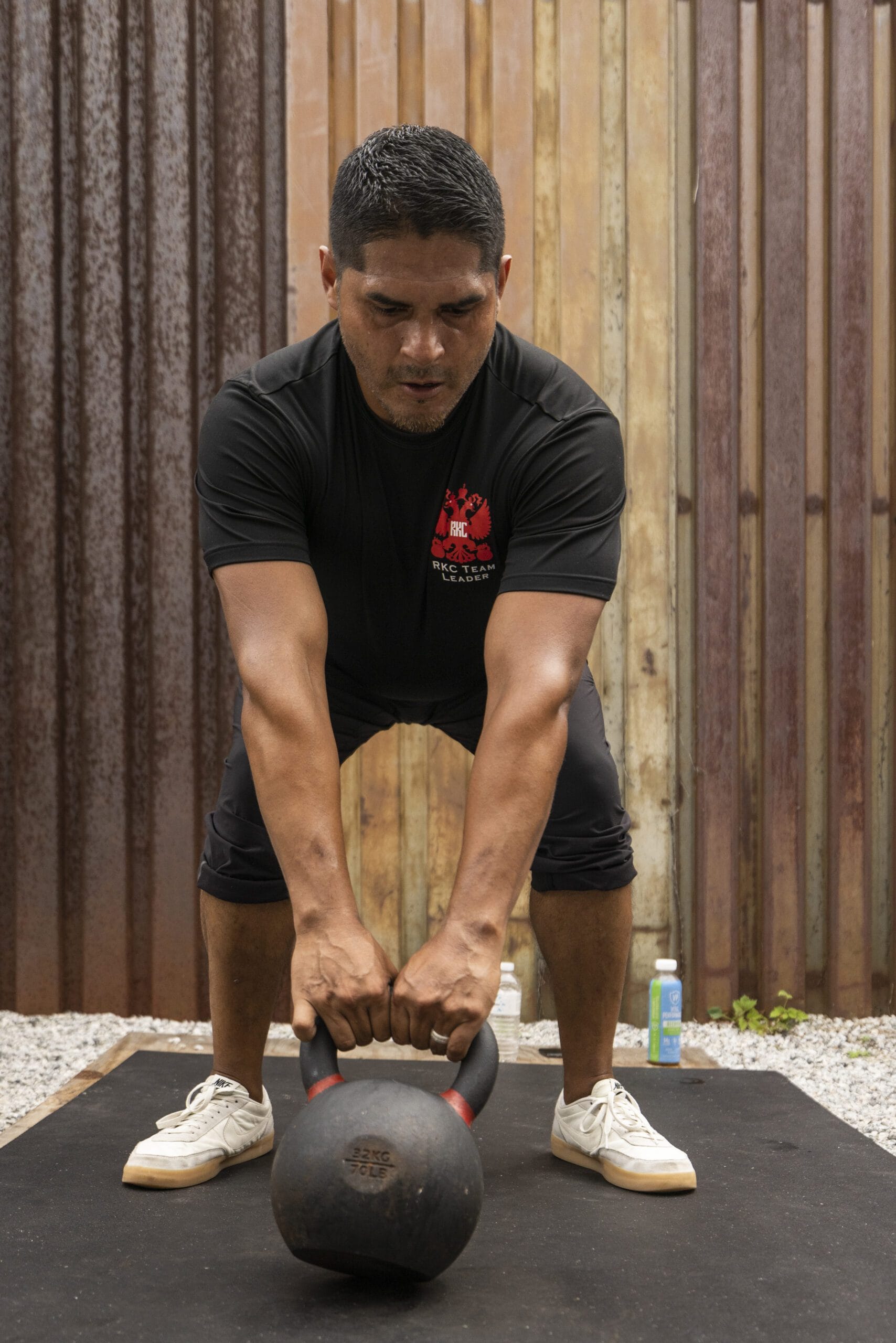
A study in the Journal of Strength and Conditioning Research found that corrective exercise programs improved FMS scores in Army ROTC cadets after just four weeks of targeted intervention. Marco Guanilo (Master RKC, NASM-CES) has spent over 20 years applying that same screen-and-correct approach to clients working through injury rehab, chronic pain, and post-surgical recovery. His clients see measurable FMS score improvements because the programming targets what the screen actually reveals, not a generic set of corrective drills.
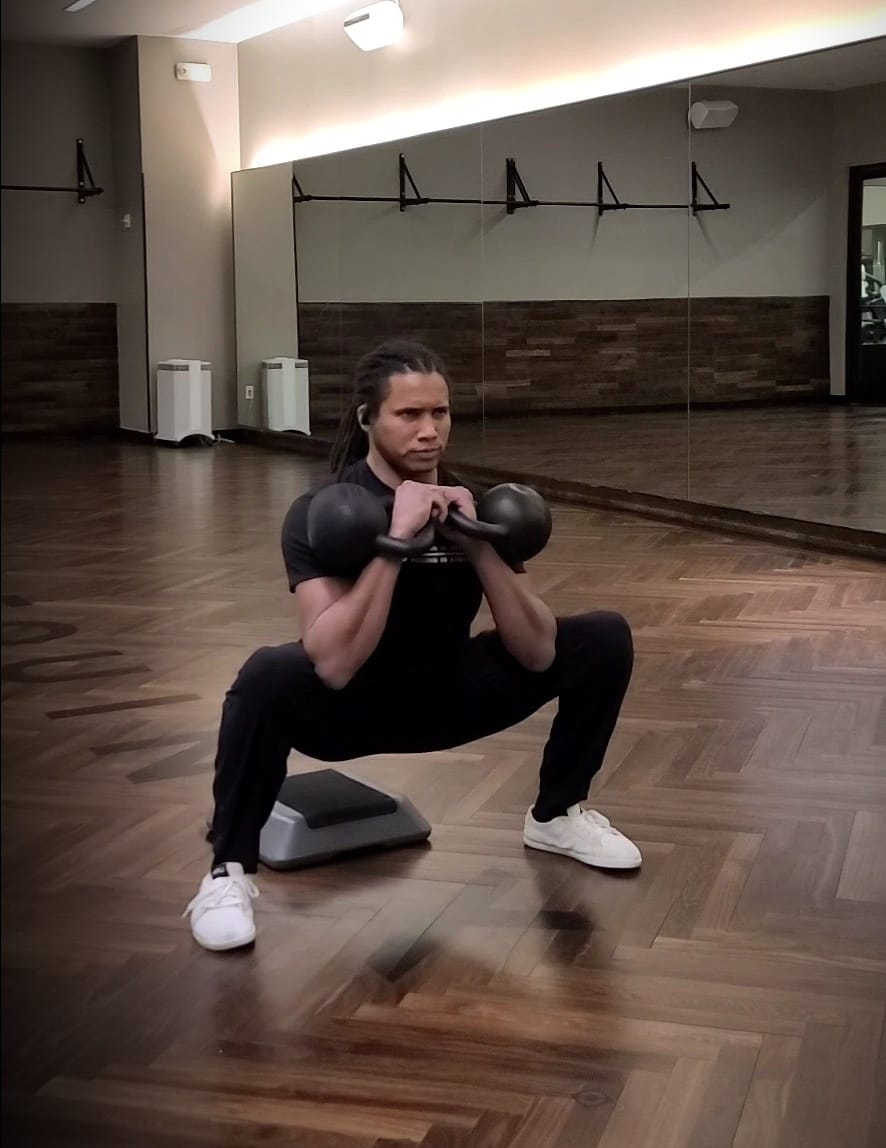
Clients who came in unable to press overhead without pain find themselves pressing clean within two to three months. Julia Chan pairs her NASM-CES with a 500-hour yoga certification, which means her corrective programs address both the structural imbalance and the mobility restriction feeding it. For clients whose shoulder or hip dysfunction has a flexibility component, that combination resolves issues that corrective exercise alone might not reach.
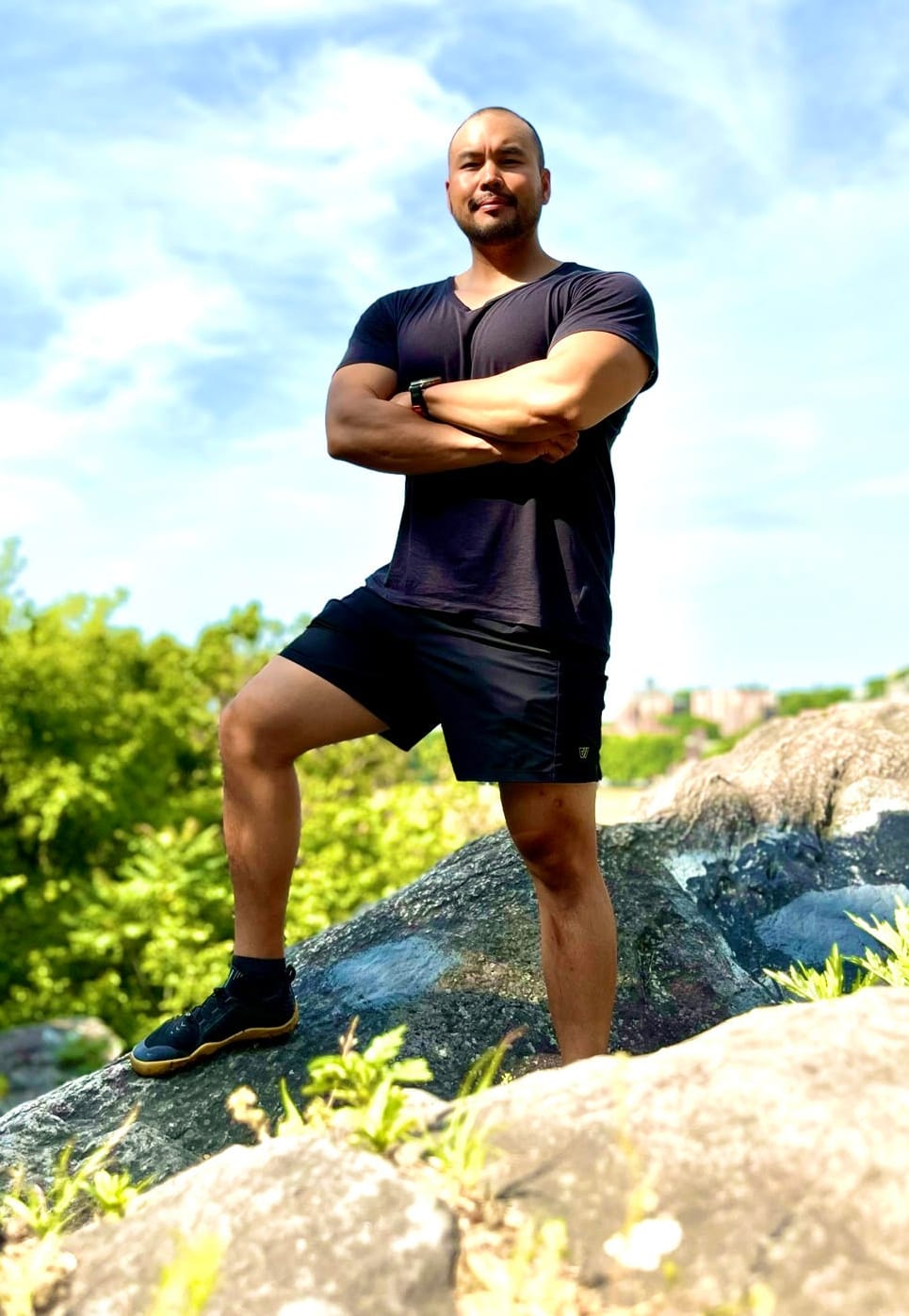
Desk workers dealing with Upper Cross Syndrome or chronic lower back tightness see some of the fastest turnarounds. David Tepattaporn uses his NASM-CES alongside Stick Mobility certification to target the postural compensations that prolonged sitting creates. His clients typically report reduced pain and noticeably better posture within six to eight weeks of consistent work. These are not vague "wellness" outcomes. They're measurable improvements tracked through periodic FMS re-screens and InBody assessments.
How Momentum Delivers Corrective Exercise
Personal training for corrective exercise starts one-on-one because the programming is individual by nature. Your compensation patterns are yours. Your trainer builds a program around your FMS results, your injury history, and the specific imbalances your assessment reveals. A typical session might start with foam rolling and soft tissue work to release overactive muscles, move into targeted activation drills for the muscles that aren't firing, and finish by integrating those corrections into compound movements like squats, deadlifts, or carries. The programming evolves as your movement quality improves.
The depth of corrective exercise expertise on staff is unusual for a gym this size. Six trainers hold the NASM-CES, and several more carry FMS or post-rehab credentials. Marco Guanilo (Master RKC, NASM-CES) has spent over 20 years training clients through injury rehab. Several trainers bring specialized corrective exercise backgrounds: Julia Chan combines her NASM-CES with a 500-hour yoga certification for mobility-focused correction work, Isabella Stansbury applies corrective exercise specifically to pre and postnatal clients, and David Tepattaporn uses Stick Mobility as a corrective tool for desk workers. When your trainer identifies a compensation pattern, they're drawing on credentials and clinical thinking that most gyms don't have on staff at all.
Group classes complement corrective exercise for clients who want structured mobility and core work alongside their personal training. Core & Mobility with JJ Biasucci focuses on core stability, core function, and movement quality in a coached, small-group setting. Strong Support (Yoga for Active Bodies) with Kiara Kolaczyk is recovery-focused: functional stretching, breathwork, and mobility work designed for people who lift or run. Both are capped at eight to ten people, so your instructor can give real corrections, not just general cues to the room.
Every personal training client gets a free Functional Movement Screen and access to InBody body composition scans. No membership required. Buy a corrective exercise personal training package or a class pack. Packages don't expire and you can share sessions with a friend or family member.
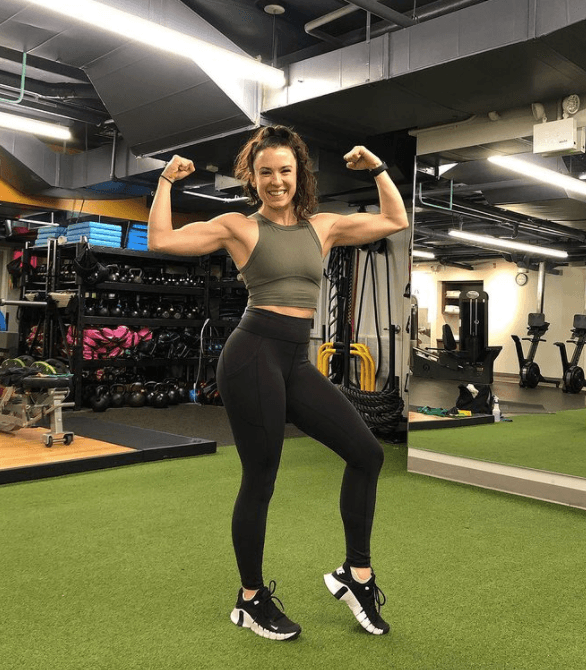
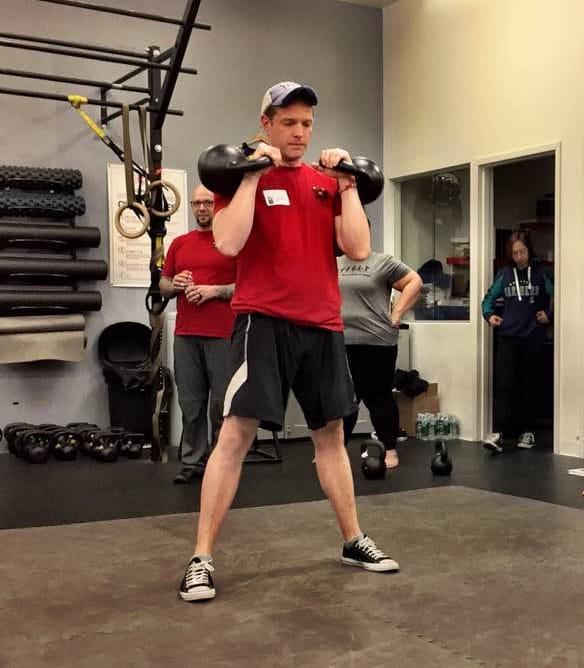
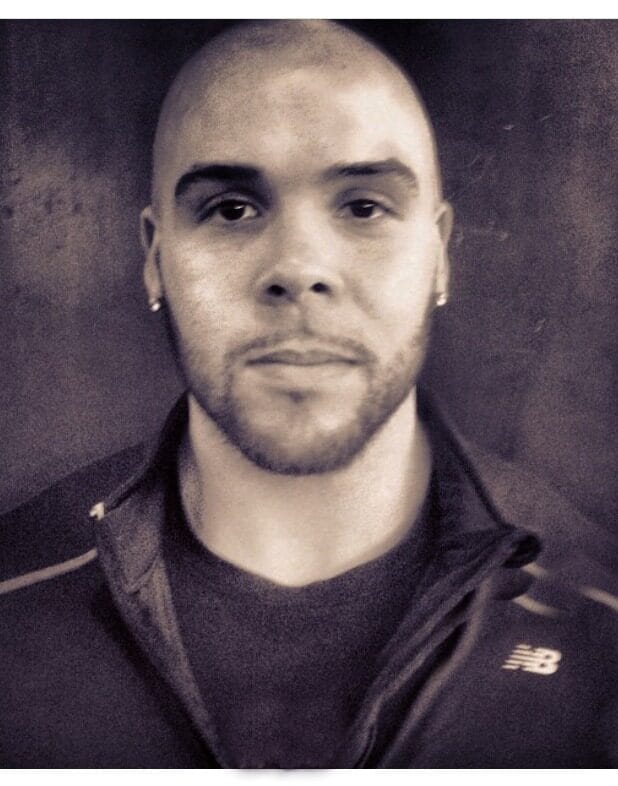
Your Corrective Exercise Trainers




Frequently Asked Questions
What is corrective exercise?
Corrective exercise is a method of identifying movement dysfunctions (muscle imbalances, joint restrictions, compensation patterns) and using targeted exercises to fix them. It follows a structured process: screen your movement, find where things break down, then use specific techniques to restore proper function. At Momentum, every corrective exercise program starts with a Functional Movement Screen so your trainer is working from data, not assumptions.
What does a corrective exercise specialist do?
A corrective exercise specialist holds advanced certification (like the NASM-CES) in assessing movement quality and designing programs to fix dysfunctions. They don't just give you exercises. They identify the root cause of your pain or restriction, determine which muscles are overactive and which are underactive, and build a phased program to restore balance. Eight of Momentum's trainers hold the NASM-CES or equivalent corrective exercise credentials.
Is corrective exercise the same as physical therapy?
No. Physical therapy is a licensed clinical practice that treats injuries, manages post-surgical recovery, and addresses acute pain. It's performed by a licensed physical therapist, often covered by insurance, and typically ends when you're discharged as "functional." Corrective exercise picks up from there. It's fitness-based, not clinical. Your corrective exercise specialist works on the movement patterns, muscle imbalances, and compensations that physical therapy may not fully resolve. Many of Momentum's clients come in after finishing PT because they're cleared to exercise but still don't move well. Corrective exercise bridges that gap between "discharged" and "actually moving without pain." Momentum shares a building with MICCASS PT on the Upper West Side, which makes coordination between your physical therapist and corrective exercise specialist straightforward.
How long does corrective exercise take to work?
Most clients notice improvement in pain levels and range of motion within two to four weeks. That initial progress comes from releasing overactive muscles and activating ones that weren't firing. Longer-term pattern correction (rebuilding movement quality under load, eliminating compensations during complex exercises) typically takes two to three months of consistent work. Your trainer tracks progress through periodic FMS re-screens so the improvements are measurable, not just felt.
Can corrective exercise fix posture?
Yes, and it's one of the most common reasons clients start. Poor posture is usually the result of specific muscle imbalances. Tight chest and upper trap muscles pull your shoulders forward and your head into a forward position (Upper Cross Syndrome). Tight hip flexors and weak glutes tilt your pelvis forward and compress your lower back (Lower Cross Syndrome). Corrective exercise addresses the specific muscles causing the dysfunction, not just the symptom. Clients who work desk jobs and commit to corrective exercise consistently see meaningful posture improvement within six to eight weeks.
Can corrective exercise help with scoliosis?
Corrective exercise can help manage scoliosis-related discomfort and improve functional movement around a spinal curve, but it doesn't straighten the spine. Your trainer uses the FMS to identify the compensations your body has built around the curvature, then programs exercises to improve symmetry, reduce pain, and build the core stability that supports your spine. If you have a diagnosed scoliosis, bring your imaging or clinical notes to your first session so your trainer can program around the specific curvature.
Can I do corrective exercises on my own?
You can do the exercises once you've learned them. The part you can't do on your own is the assessment. A Functional Movement Screen identifies compensations you can't see or feel because your body has adapted to them. Your trainer designs the corrective program based on what the screen reveals, teaches you the exercises with proper form, and adjusts the program as your movement quality improves. The value isn't in the exercises themselves. It's in knowing which exercises you specifically need and in what sequence.
Do I need a doctor's referral for corrective exercise?
No. Corrective exercise is a fitness service, not a clinical one. You don't need a referral or insurance authorization. If you're currently in physical therapy or recovering from a recent surgery or injury, we recommend finishing your PT course first. Your corrective exercise specialist can coordinate with your physical therapist to make sure your program picks up where clinical care leaves off.
Is corrective exercise covered by insurance?
No. Because corrective exercise is fitness-based training, not clinical rehabilitation, it's not covered by health insurance. The advantage of that is there are no visit limits, no prior authorization, and no co-pays. You work with your trainer as long as you need to at whatever frequency makes sense for your goals. Packages don't expire.
What should I expect in my first corrective exercise session?
Your first session starts with a Functional Movement Screen. Your trainer takes you through seven movement patterns to identify restrictions, asymmetries, and compensations. Based on the results, they'll walk you through the initial corrective exercises: foam rolling or soft tissue work to inhibit overactive muscles, stretching to lengthen them, and activation drills to wake up the muscles that aren't doing their job. You'll leave knowing exactly what your movement limitations are and what the plan is to fix them. The first session is complimentary for new clients.