Kettlebell Training on the Upper West Side
Fifteen certified kettlebell instructors. Dedicated kettlebell classes capped at ten people. The gym where other trainers come to get certified. Whether you're picking up a kettlebell for the first time or chasing a heavier press, this is where serious kettlebell training happens on the Upper West Side.
What Sets Kettlebell Training Apart
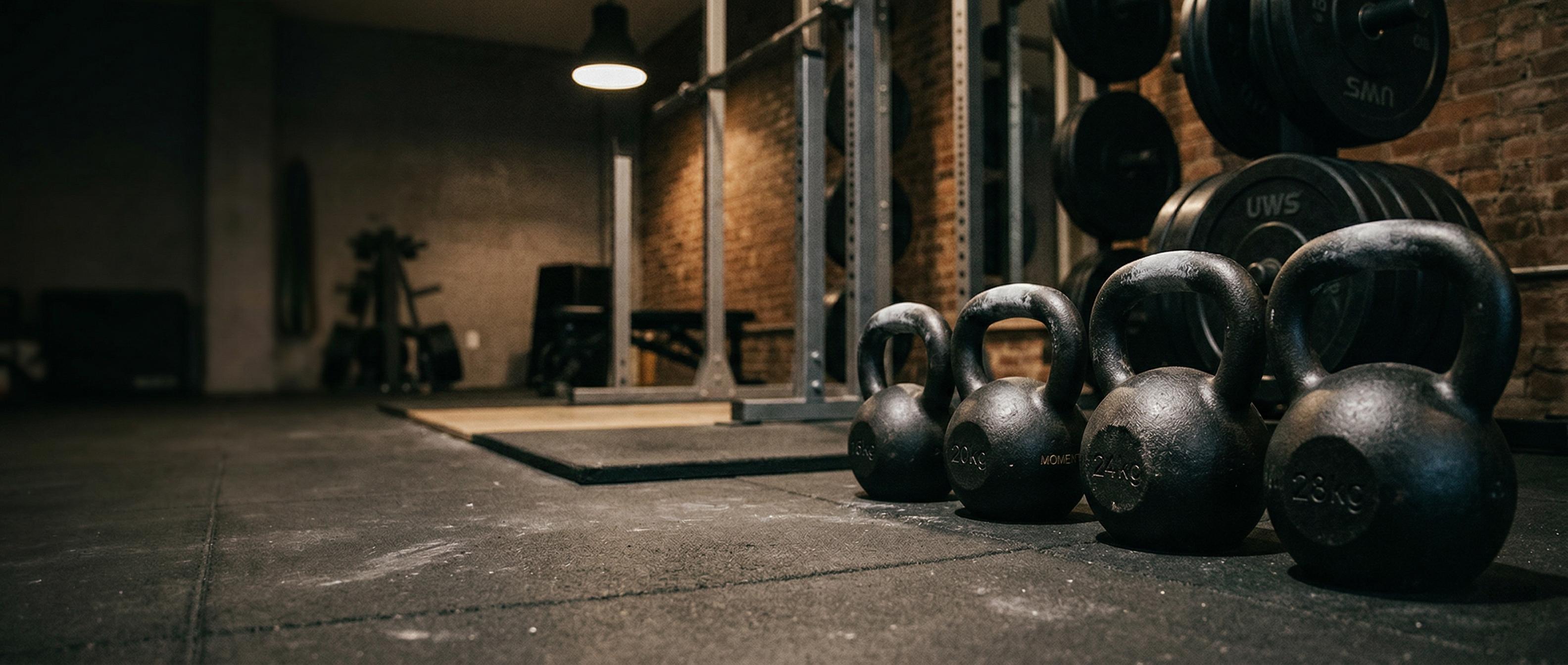
A kettlebell is a cast-iron weight with a handle on top. That simple design lets you swing, press, squat, and carry it in ways that dumbbells and barbells can't replicate, and it trains your entire body in a single movement.
Kettlebell training splits into two categories. Ballistic movements (swings, cleans, snatches) build explosive hip power, grip strength, and cardiovascular endurance. Grinds (presses, squats, Turkish get-ups) build raw strength, shoulder stability, and total-body control. Most sessions use both, which is why a forty-minute kettlebell workout can replace an hour of separate strength and cardio training.
What makes it different from picking up weights at a commercial gym is the coaching. A properly taught kettlebell swing is a precise hip hinge that loads your glutes and hamstrings while sparing your lower back. Taught poorly, it's a recipe for injury. That's why certification matters.
Momentum's kettlebell program is built around the RKC (Russian Kettlebell Challenge) system, one of the most rigorous kettlebell certifications in the industry. It's a two-day gauntlet of technique testing, strength standards, and live coaching assessments. Candidates fail if their form or teaching ability doesn't meet the standard. Momentum's owner, Marco Guanilo, holds a Master RKC and leads the RKC and HKC certification courses hosted right here in the gym. The trainers on this floor learned from the same system, and several hold advanced RKC II or dual RKC/SFG credentials.
Once you have the kettlebell fundamentals dialed in, the training evolves. Double kettlebell work (two bells at once) adds a coordination and loading challenge that changes the game for clients who've outgrown single-bell programming. The gym stocks a full range of RKC kettlebells from 8kg to well beyond what most people will ever need, so you'll never outgrow the equipment.
Who It's Best For
You sit at a desk all day and your back reminds you every evening. You don't have time for a long gym session, but you need something that actually builds strength and loosens you up in the same workout.
You used to play a sport and you miss training that feels athletic. Explosive, coordinated, skill-based. Not just grinding through sets on a leg press.
You're a parent and you want the kind of functional strength that shows up when you're carrying a kid in one arm and groceries in the other without thinking about it.
You've been doing the same gym routine for years and you're bored. Kettlebell training is a skill that progresses. There's always a heavier bell, a harder variation, or a movement you haven't learned yet.
You're a woman who wants to build real strength without a bodybuilder-style program. Kettlebell training builds lean, functional power through movements that work your entire body. Most of Momentum's female clients start pressing heavier than they expected within months because the progression is skill-based, not just load-based.
You run, cycle, or do endurance training and you need posterior chain strength (glutes, hamstrings, back) without adding bulk or spending an hour in the weight room. The gym is a block from Central Park, which makes it easy to pair your runs with coached strength work on the same day.
More Than Just Strength
Clients who train with kettlebells consistently report stronger grip, better posture, and less lower back pain, often within the first month. The posterior chain emphasis corrects the imbalances that desk sitting builds over time.
A 2010 ACE study found that a kettlebell snatch protocol burned roughly 20 calories per minute, comparable to cross-country skiing uphill. That efficiency is built into how Marco Guanilo (Master RKC) programs kettlebell sessions: ballistic movements keep your heart rate elevated while you're building strength, so clients get conditioning and strength work in the same session instead of splitting their week between the two. Marco has spent over 20 years refining this approach, and he's one of the people who certifies other RKC instructors internationally. The programming his clients follow isn't pulled from a textbook. It's built on two decades of coaching kettlebell athletes and everyday clients through the same system.
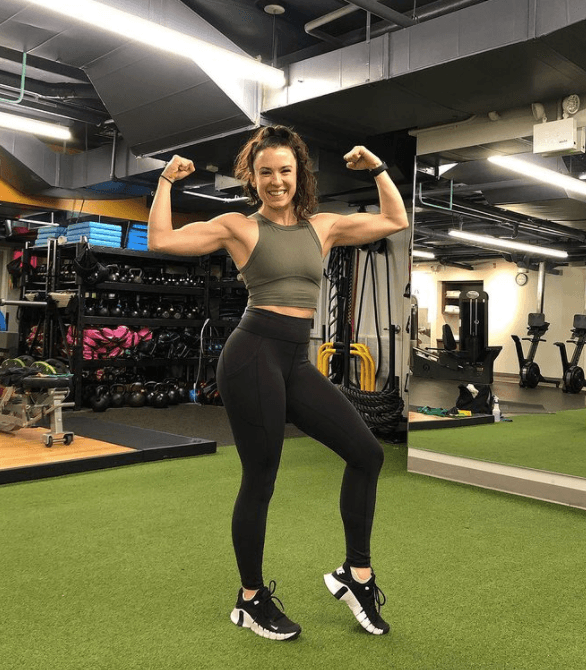
Research from the American Physiological Society (2024) found that older adults who trained with kettlebells for six months gained muscle mass, grip strength, and upper leg strength. Kate Edwards (RKC + SFG) is dual-certified across the two hardest kettlebell systems in the industry, which means her programming draws from both traditions. For clients who have outgrown single-bell work, her double kettlebell programming adds a coordination and loading challenge that accelerates strength gains in ways that single-bell training plateaus on.
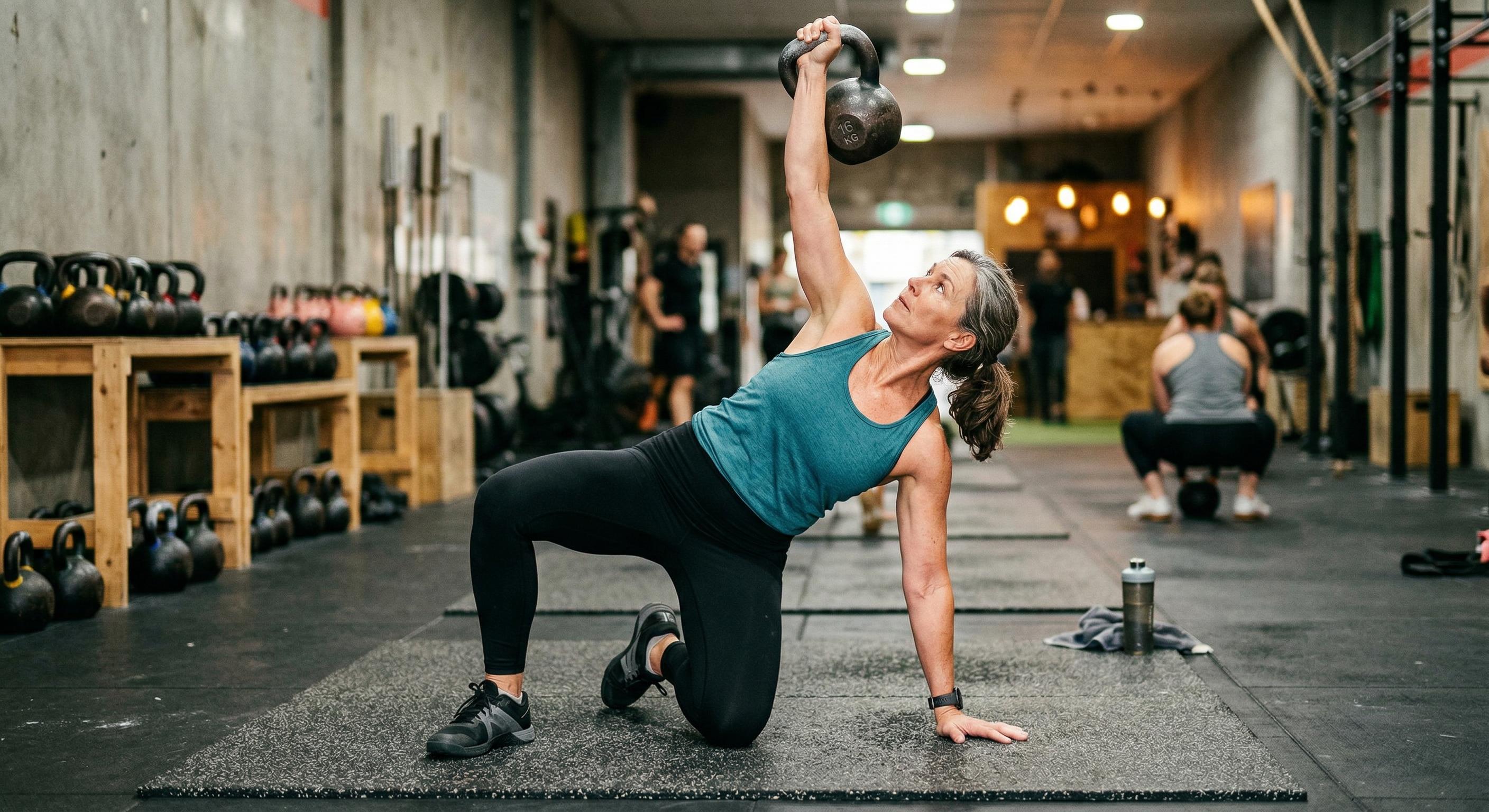
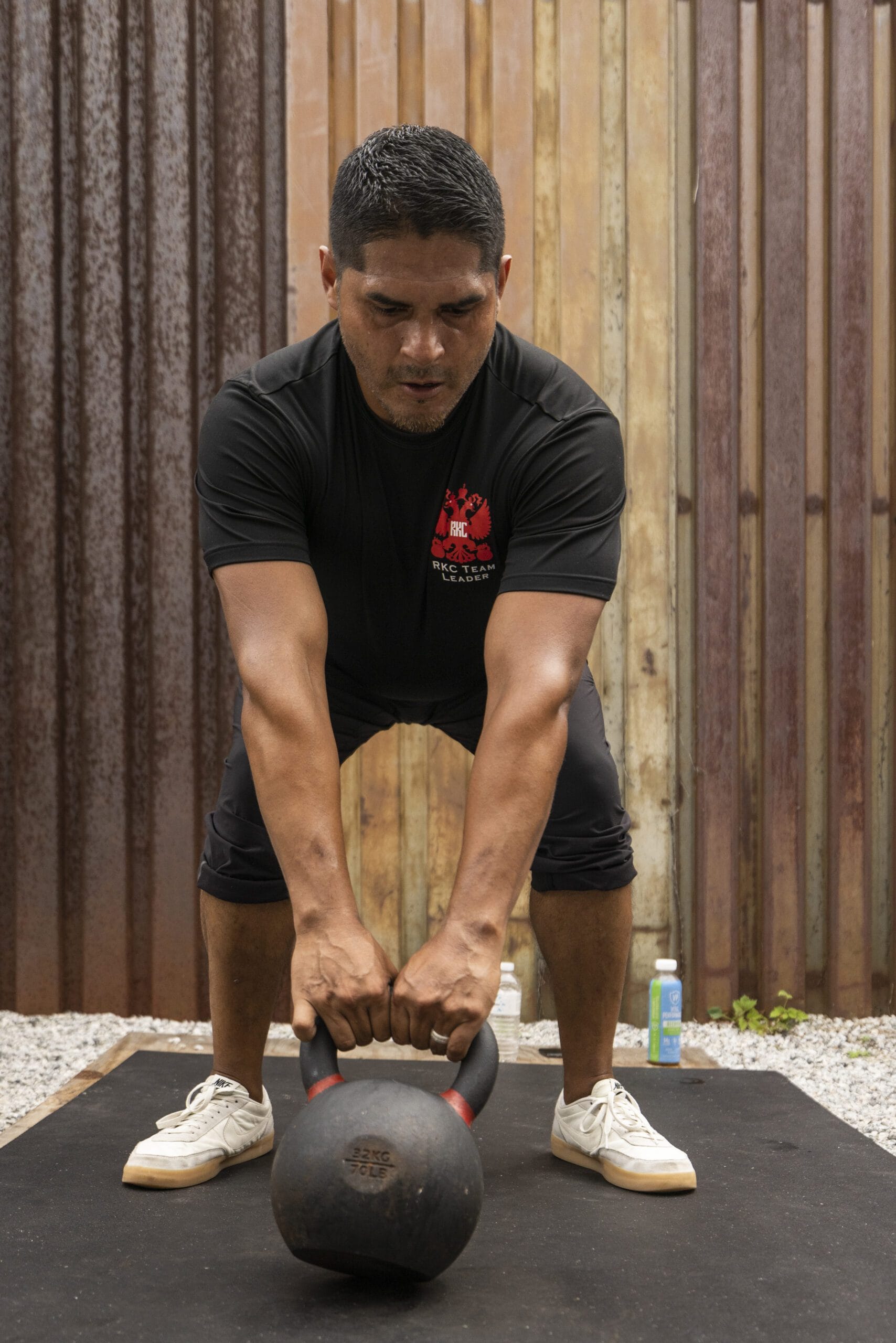
There's a coordination and body awareness component that most people don't expect. Movements like the Turkish get-up take you from lying on the floor to standing with a weight locked overhead, training stability through every joint along the way. Geoffrey Hemingway (RKC Team Leader) coaches these complex movements with the precision that his Team Leader credential demands, breaking each position down so clients build full-body control, not just full-body fatigue. That kind of training translates directly to how you move outside the gym.
How Momentum Delivers Kettlebell Training
One-on-one with Momentum's personal trainers means your program is built around you, not a generic template. Your trainer teaches the foundational movements (the swing, the clean, the press, the get-up) at your pace, correcting form in real time. As your technique improves, the weight goes up, the movements get more complex (loaded carries, double kettlebell complexes, heavier snatches), and the programming evolves. Sessions aren't random workouts. They're structured progressions designed to build on each other.
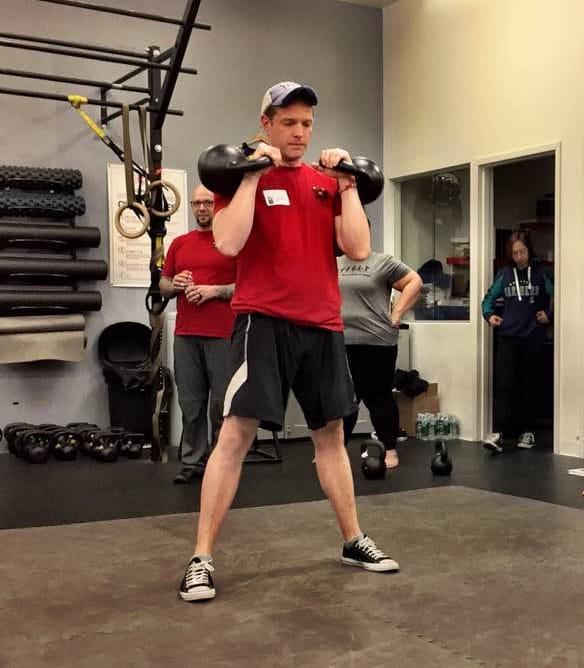
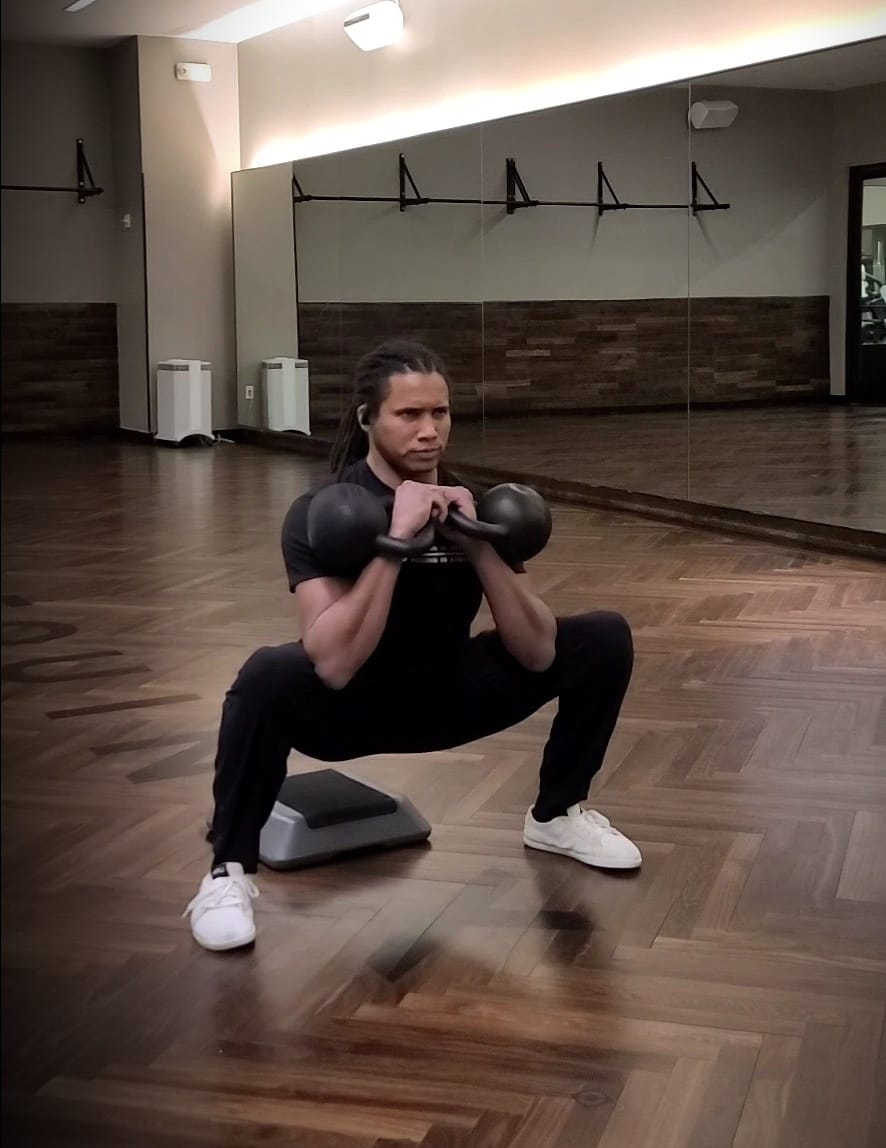
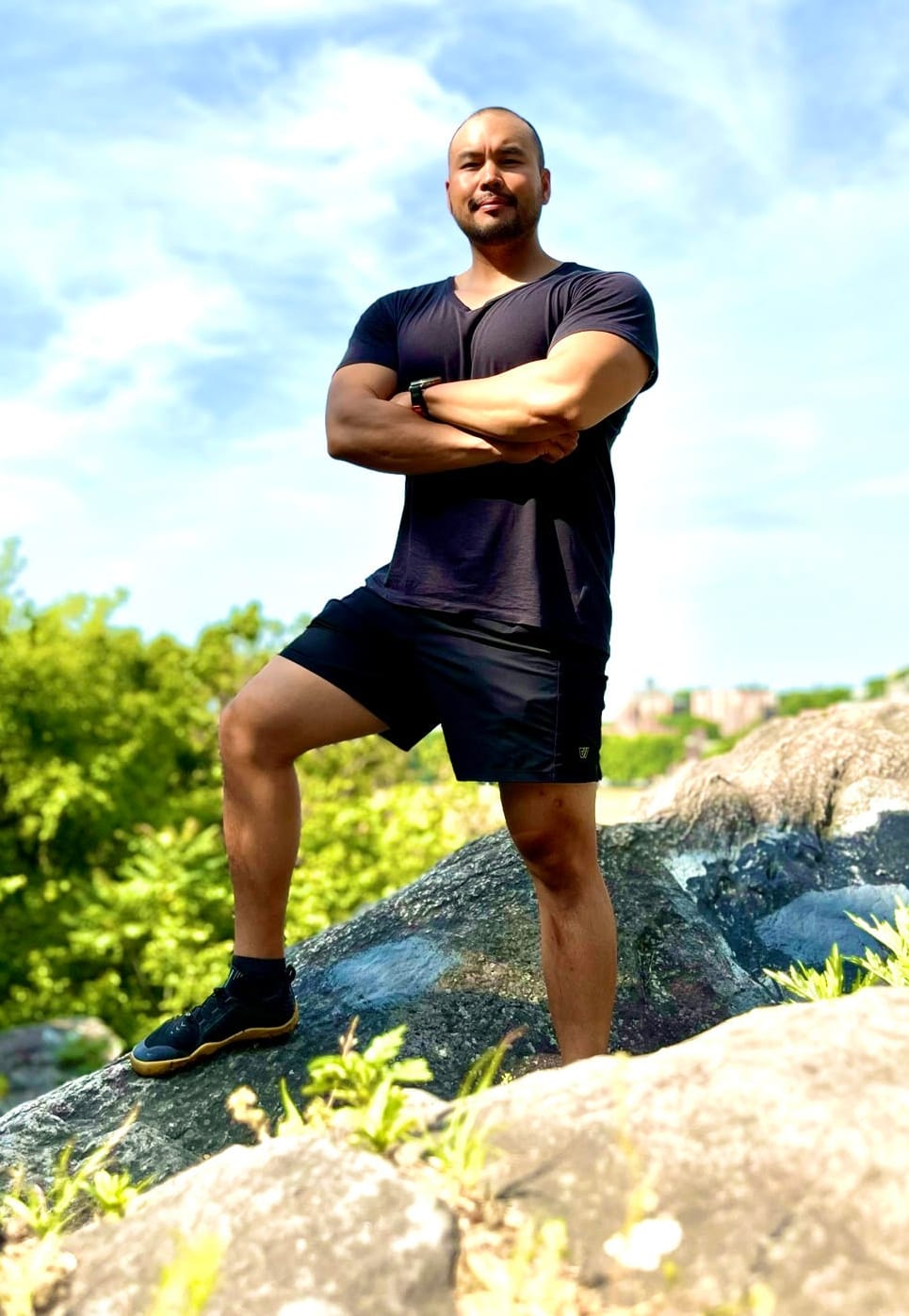
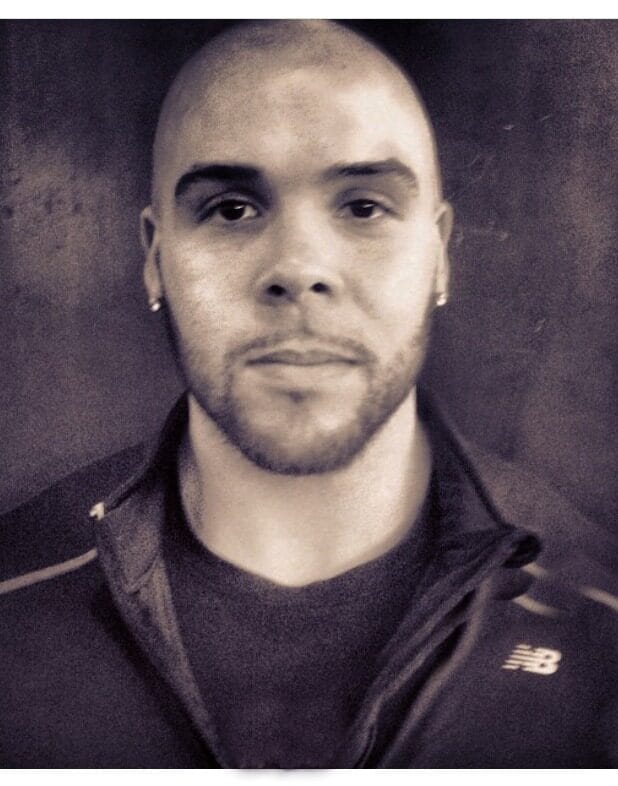
The depth of kettlebell expertise on staff is uncommon. Marco Guanilo (Master RKC) is one of the people who certifies other kettlebell instructors internationally. Kate Edwards holds both the RKC and SFG, dual-certified across the two hardest kettlebell systems. Geoffrey Hemingway is an RKC Team Leader. Jen Ares-Cruz, Hernan Quintanilla, and Bradford Shreve all hold the advanced RKC II. When your kettlebell instructor corrects your swing, they're drawing on credentials that most gyms don't have on staff at all.
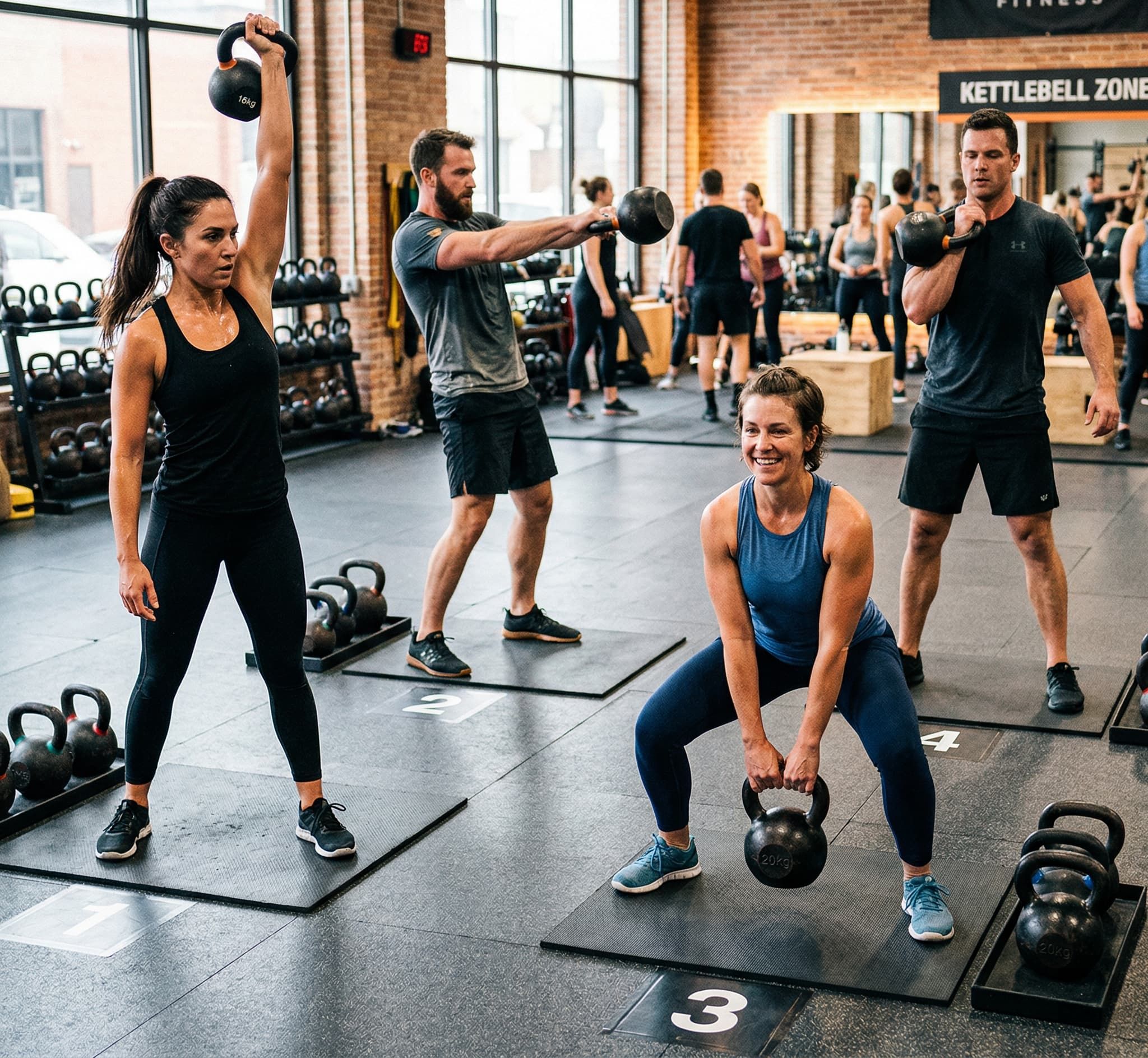
Group classes bring kettlebell training into a coached, small-group setting. ABC's of KB's with Geoffrey Hemingway teaches the foundational lifts (deadlifts, cleans, squats, presses, rows, loaded carries) with progressive technique at every level. Kettlebell Power & Play with Sara Villagio is a more accessible, energy-driven class built on functional kettlebell patterns. Both are capped at eight to ten people, which means your instructor has eyes on your form for every rep.
Early Morning HIIT, Full Body HIIT, and Strength & Conditioning also incorporate kettlebells alongside other tools for clients who want variety.
No membership required. Buy a personal training package or a class pack. Both are shareable with friends or family, and neither expires.
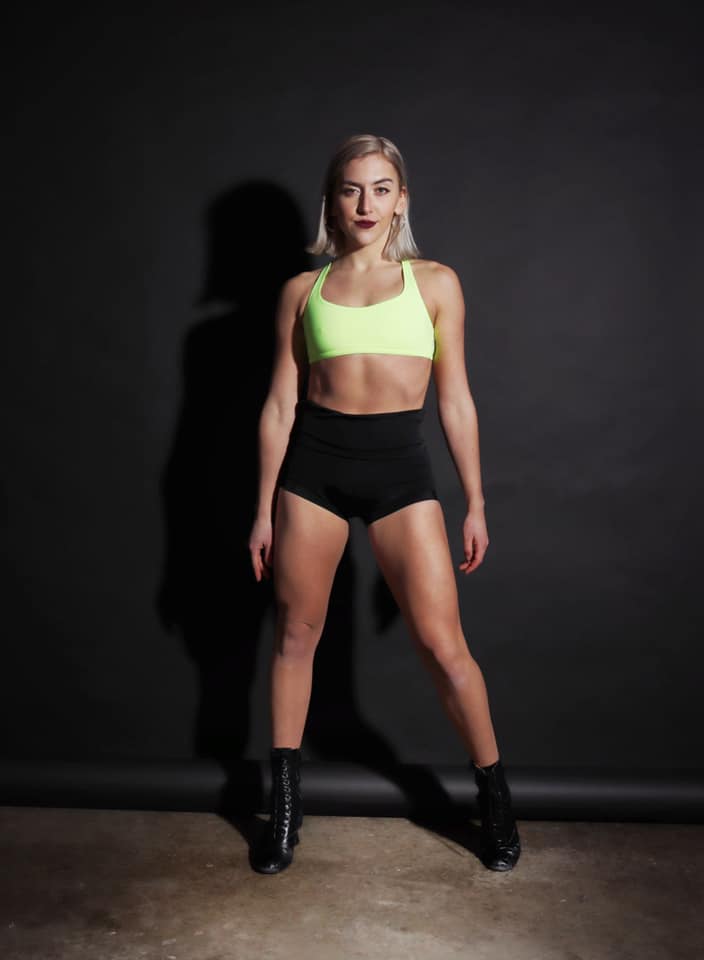
Your Kettlebell Trainers





Frequently Asked Questions
Do I need experience to start kettlebell training?
No. If you're starting with personal training, your trainer teaches the foundational movements from scratch and builds your program around your current ability. If you'd rather start in a class, ABC's of KB's is designed for all levels. Geoffrey breaks down every movement from the ground up.
Are kettlebells safe if I have back pain or a previous injury?
When coached correctly, kettlebell training is one of the best things you can do for your back. The swing and deadlift patterns strengthen the glutes, hamstrings, and spinal stabilizers, which are the muscles that protect your lower back. Your trainer assesses how you move before loading any weight, and programs around any limitations.
Can I do kettlebell training in group classes or only personal training?
Both. ABC's of KB's and Kettlebell Power & Play are dedicated kettlebell classes. Several HIIT and S&C classes also use kettlebells alongside other equipment. Classes are capped at eight to ten people so your instructor can coach you individually.
What makes RKC different from other kettlebell certifications?
The RKC is one of the most rigorous kettlebell certifications you can earn. It's a two-day test of technique, strength, and coaching ability where candidates are held to strict standards. Not everyone who shows up walks away certified. Momentum's owner holds a Master RKC, which means he's one of the people who certifies other RKC instructors. The RKC and HKC certifications are hosted at Momentum, so the same standard that trains professional instructors is built into every session here.
How heavy should my first kettlebell be?
Your trainer picks your starting weight based on your movement quality, not a guess. Momentum stocks a full range from 8kg up. Most women begin around 8-12kg and most men around 12-16kg, but it varies. Your training history and how you move are what determine where you start.
How long does it take to learn kettlebell fundamentals?
Most clients feel confident with the basic swing, goblet squat, and Turkish get-up within four to six sessions. That's confident enough to train with good form and jump into a group class. The skill ceiling is much higher than that, though. Movements like the snatch, double kettlebell clean and press, and heavy get-ups take months to refine. That's part of what keeps kettlebell training interesting long-term.
Is 20 minutes of kettlebells really that effective?
Twenty minutes of focused kettlebell work can match the calorie burn of a much longer conventional gym session. That efficiency is exactly why Momentum's trainers use kettlebells as a foundation: when the strength and conditioning piece is that dense, the rest of your hour opens up for mobility work, corrective exercise, skill development, or movement patterns you wouldn't have time for otherwise. You get more out of an hour because the kettlebell portion does more per minute.
How many days a week should I do kettlebell training?
Two to three days per week is the sweet spot for most people. That gives your body time to recover between sessions while building skill and strength consistently. Clients doing a mix of personal training and group classes often train kettlebells two days and add one or two other sessions (HIIT, yoga, mobility) for variety. Your trainer builds the weekly schedule around your recovery capacity and other activities.
Do I need a conventional gym if I train with kettlebells?
Kettlebells can replace most of the machines and cable stations in a big-box gym. What they can't replace is coaching, structured programming, and a training environment built for this kind of work. That's the difference between swinging a kettlebell in your apartment and training at a facility with a full range of competition-grade bells, certified RKC instructors correcting your form in real time, and a program that progresses week to week. The tool is simple. Using it well is a skill, and skill develops faster with the right coaching and equipment.