Calisthenics and Bodyweight Training on the Upper West Side
Your body is the equipment. Calisthenics and bodyweight training at Momentum Fitness builds real strength through pull-ups, push-ups, dips, handstands, and progressions that most commercial gyms don't teach and most trainers can't coach. Six PCC-certified trainers, a dedicated calisthenics rig with gymnastics rings and parallettes, and programming that takes you from your first pull-up to skills you didn't think were possible.
What Calisthenics and Bodyweight Training Is
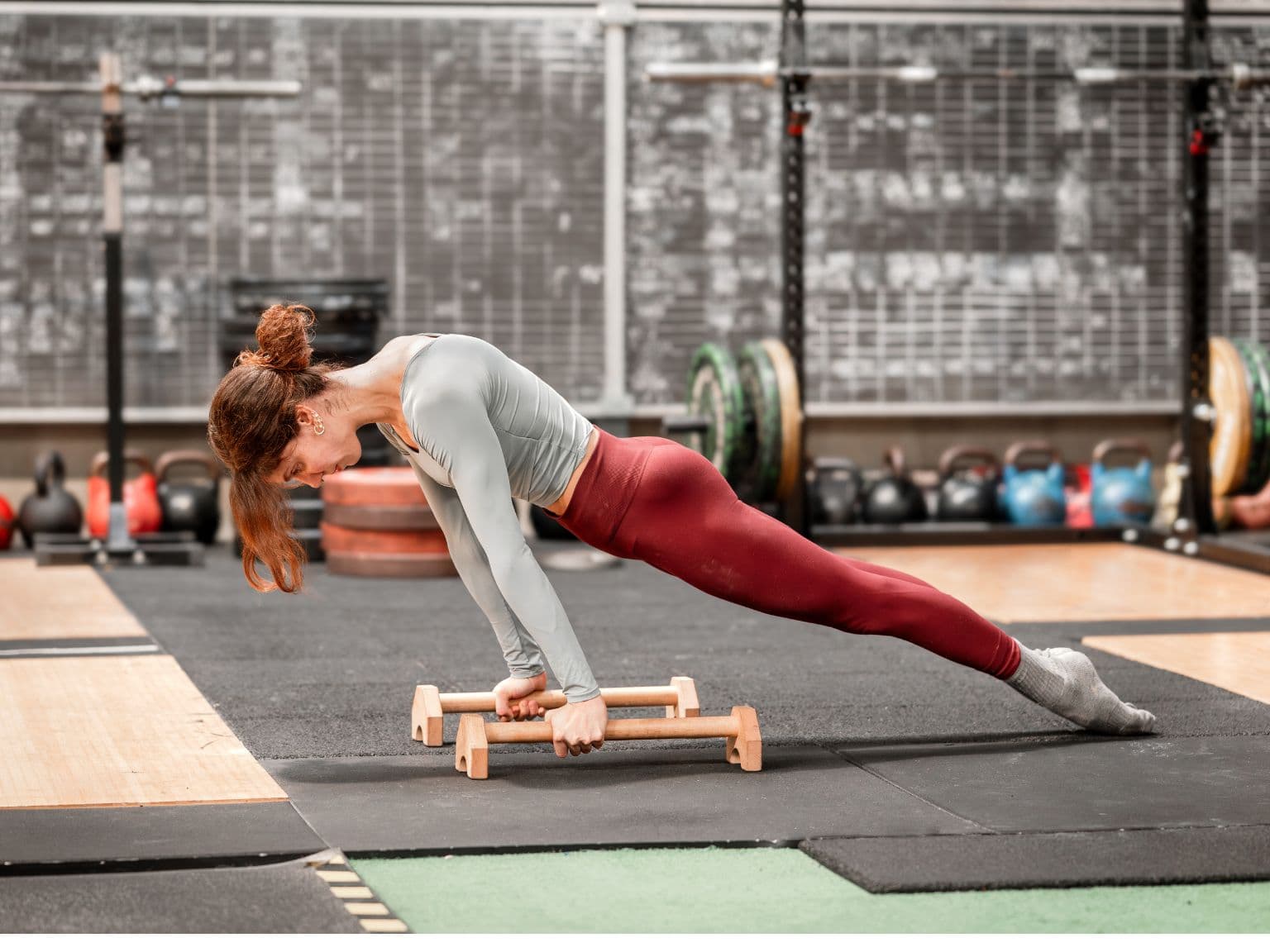
Progressive calisthenics is strength training using your own body as resistance. Instead of adding weight to a barbell, you increase difficulty by changing leverage, range of motion, or stability demands. A push-up becomes an archer push-up, then a one-arm push-up. A squat becomes a pistol squat. A pull-up becomes a muscle-up. Every exercise has a harder version waiting, which means you never outgrow the method.
The skill progressions are what set calisthenics apart from circuit-style bodyweight workouts. A front lever, a back lever, or a free-standing handstand requires months of structured training through regressions and progressions that build the specific strength, stability, and body control each skill demands. That structured approach is what the PCC (Progressive Calisthenics Certification) system teaches, and it's the foundation of how Momentum's trainers program bodyweight training.
Momentum's calisthenics rig includes pull-up bars, gymnastics rings, parallettes, dip bars, and plyo boxes. The 8,000-square-foot facility has the ceiling height and floor space for handstand work, ring training, and the kind of movement that doesn't fit in a standard weight room. Your trainer uses these tools to build sessions that match where you are right now and progress you toward wherever you want to go.
Who Calisthenics and Bodyweight Training Is Best For
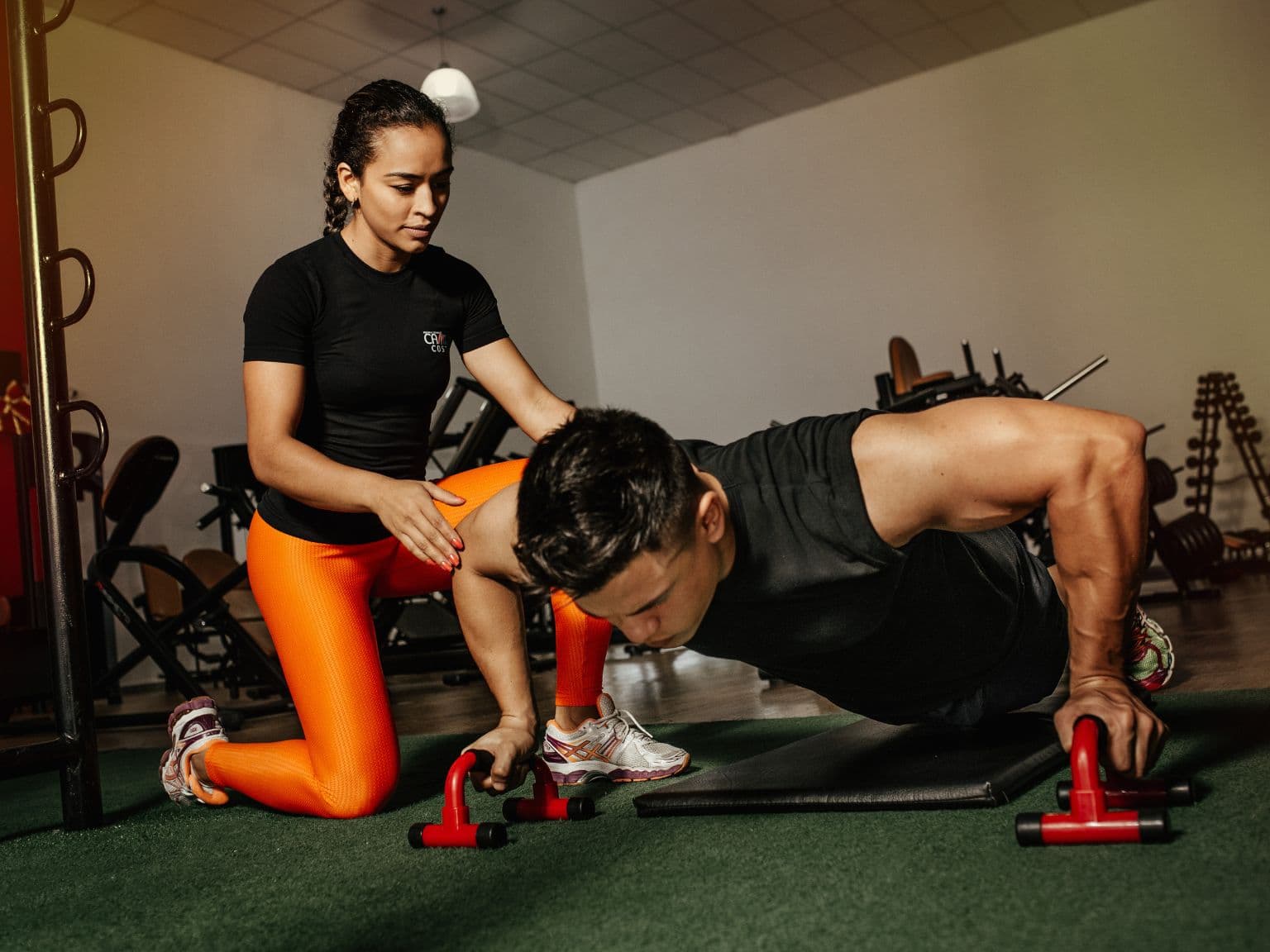
You want to build functional strength without machines. Bodyweight exercises develop relative strength (how strong you are for your body weight), which translates directly into how you move, carry, climb, and handle your own body in real life. If you've spent years on machines and cable stacks but can't do a clean pull-up, bodyweight training fills that gap.
You're a desk worker whose body has adapted to sitting. Push-ups, pull-ups, and hanging work open up the shoulders and thoracic spine. Pistol squat progressions rebuild hip and ankle mobility. The movements counteract the patterns that prolonged sitting creates, and the full range of motion demands keep your joints healthy.
You've been lifting for years and you want a new challenge. If you can deadlift double your body weight but can't hold a handstand or do a muscle-up, calisthenics introduces a skill dimension that pure barbell work doesn't touch. The learning curve is steep, the progressions are humbling, and the results build a different kind of strength.
You want a training method with a low injury rate that you can practice for decades. Calisthenics loads your joints through natural movement patterns without the spinal compression and shearing forces that heavy barbell training creates. The progressions are self-limiting: if you can't maintain form, you can't advance. That built-in governor makes it one of the safest long-term strength training methods available.
You're over 40 and you want to stay strong, mobile, and capable. Bodyweight training builds the balance, coordination, grip strength, and body control that decline with age unless you actively train them. The progressions scale down as easily as they scale up, which means there's always a starting point that matches your current ability.
What Calisthenics Training Does for You
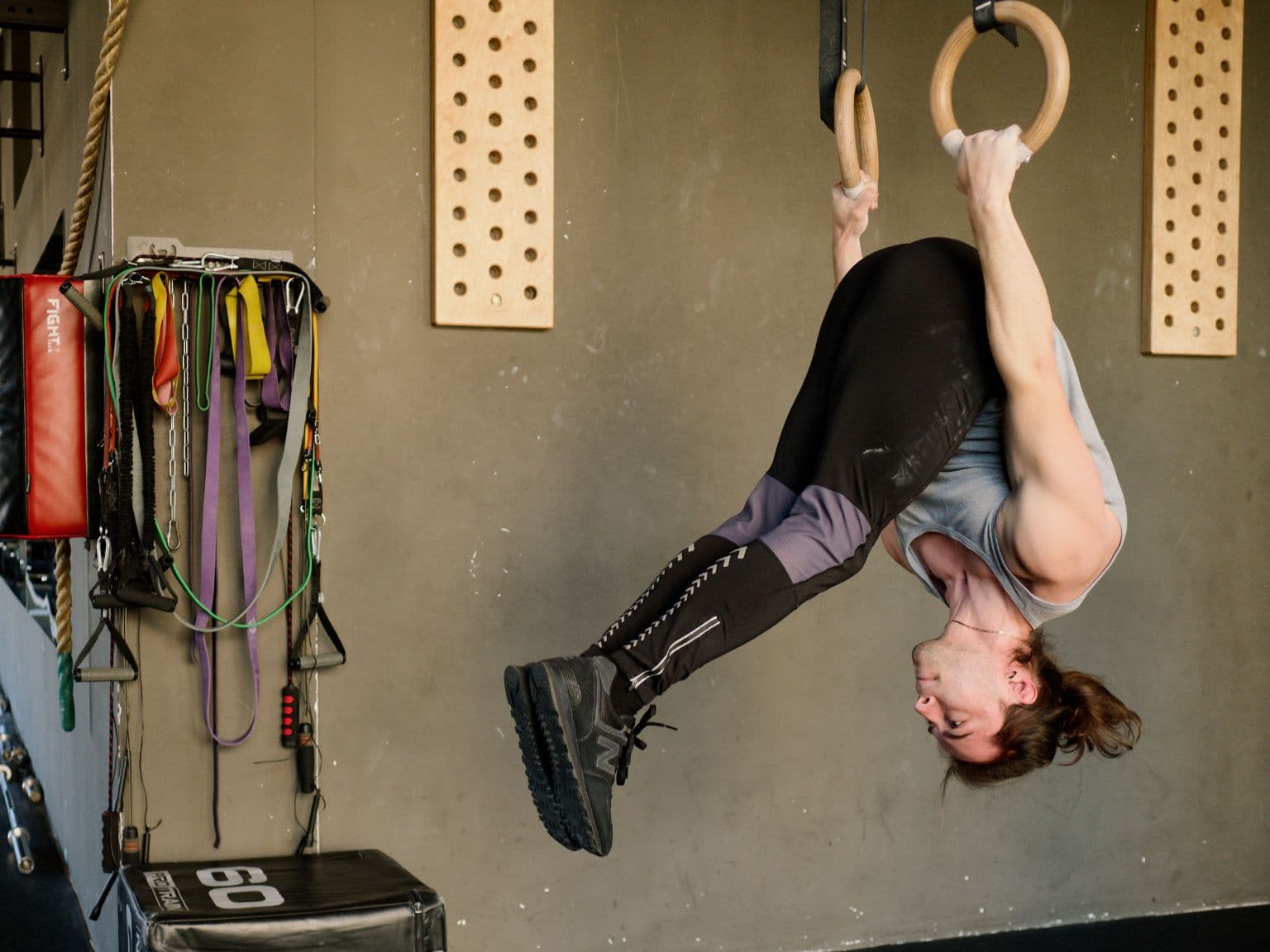
Clients who start bodyweight training typically notice improved grip strength, better posture, and more confidence with pulling and pushing movements within the first month. The early wins come from learning proper form on foundational exercises: dead hangs that decompress the spine and build grip endurance, push-up variations that activate muscles most people have never felt fire, and squat progressions that restore range of motion in the hips and ankles.
The longer-term strength gains are where calisthenics separates from machine-based training. Kate Edwards (PCC, RKC, SFG) brings a dual calisthenics and kettlebell background that's rare even among certified trainers. Her programming for clients who want to build their first strict pull-up or progress toward muscle-ups follows the PCC system's regression-based approach: breaking complex skills into components, strengthening each one, and assembling them into the full movement. Clients who start with assisted pull-ups under Kate's coaching consistently reach unassisted sets within two to three months because the progression is structured, not random.
Amanda Rosen's gymnastics background means she can demonstrate and coach the skills, not just describe them. That matters for movements like ring dips, parallette L-sits, and pistol squats where seeing the position and understanding the body tension required is half the learning process. Clients working with Amanda develop the body control that separates calisthenics from just doing push-ups and sit-ups.
Jen Ares-Cruz (PCC, RKC II, NASM-CES) combines her calisthenics certification with corrective exercise credentials, which means she spots the compensation patterns that stall bodyweight progressions. If your push-up form breaks down because of a shoulder restriction, Jen addresses the restriction first so the progression can continue without building strength on top of dysfunction. Kevin Rooney (PCC, RKC, DVRT) takes a similar approach through functional training, using the DVRT system's stability and loading progressions to build the core strength and rotational control that advanced calisthenics skills demand.
How Momentum Delivers Calisthenics and Bodyweight Training
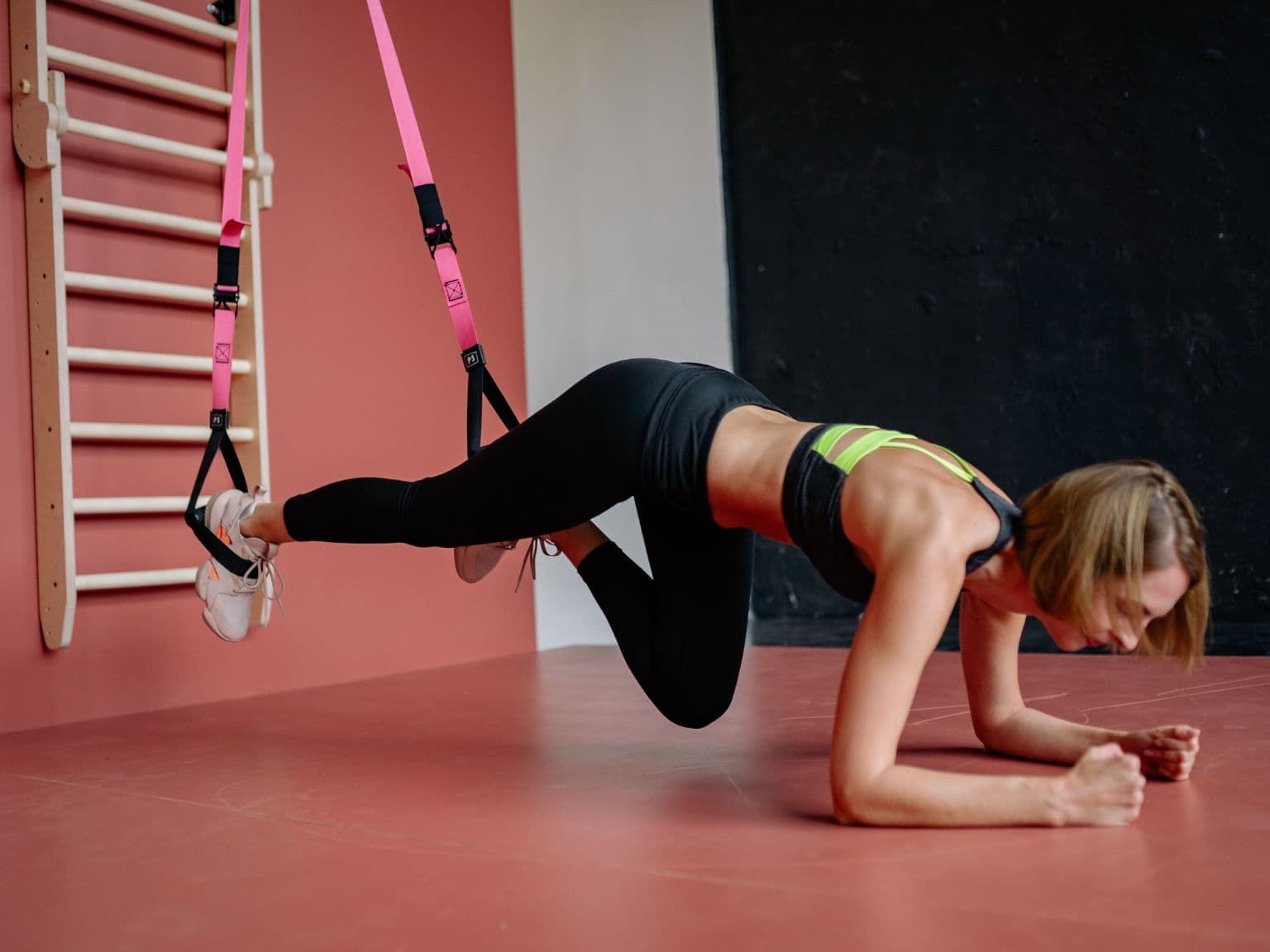
Personal training for calisthenics starts with where you are right now. Your trainer assesses your current pulling strength, pushing strength, core stability, and mobility, then builds a program targeting the gaps that stand between you and your goals. A typical session might start with joint preparation and mobility work, move into skill practice (handstand holds, ring support work, or lever progressions at whatever level you're at), then finish with strength work (weighted pull-ups, dip progressions, pistol squat variations) and conditioning. Sessions are structured progressions, not random workouts.
Six trainers hold the PCC (Progressive Calisthenics Certification), which means the bodyweight programming at Momentum follows a proven system of regressions and progressions, not a trainer making up exercises on the fly. Hernan Quintanilla (PCC, RKC II, Animal Flow) blends calisthenics with Animal Flow ground-based movement patterns that build coordination and body control through every plane of motion. Marco Guanilo (PCC, Master RKC) and Bradford Shreve (PCC, RKC II, 500-Hour Yoga) both coach advanced bodyweight skills alongside their kettlebell programming, with Bradford's yoga background adding a flexibility and spatial awareness dimension to handstand and lever work. When your trainer programs a front lever progression or spots your handstand practice, they're working from a certification system designed specifically for this kind of training.
Bodyweight Bootcamp! with Amanda Rosen is Momentum's dedicated calisthenics group class, capped at eight to ten people so Amanda can coach each person through the progressions individually. It's built on the same equipment (bars, rings, parallettes, plyo boxes) and the same skill-based approach as the personal training sessions. Bodyweight Bootcamp! is part of Momentum's Strength & Conditioning class lineup.
No membership required. Buy a personal training package or a class pack. Both are shareable with friends or family, and neither expires.
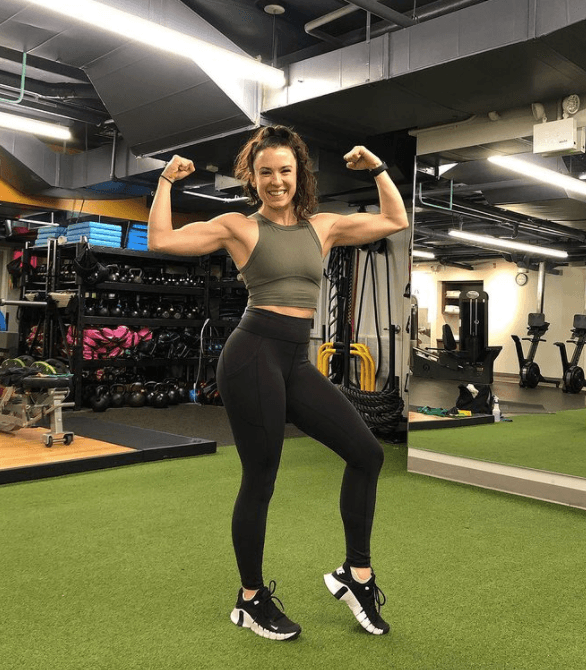
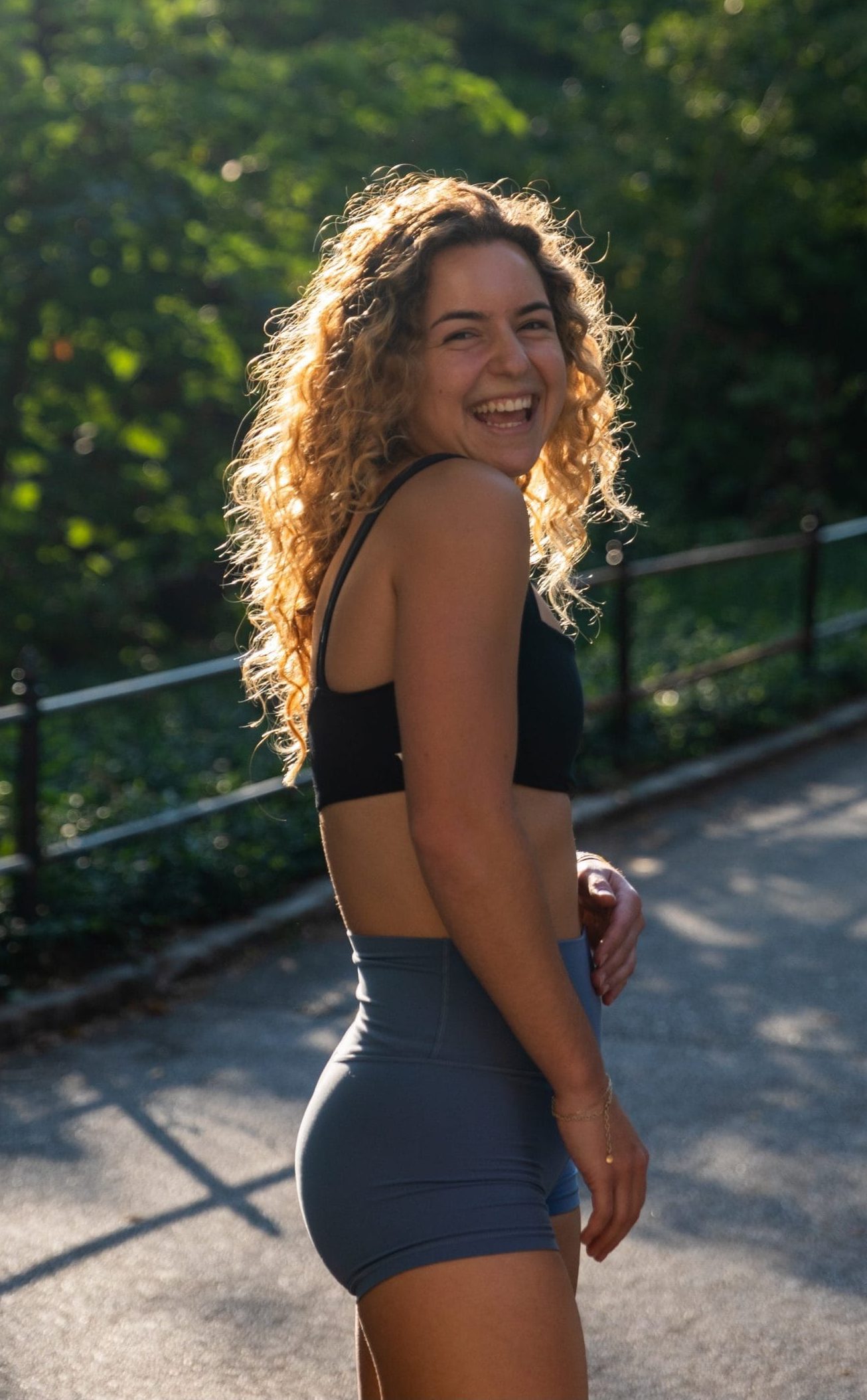
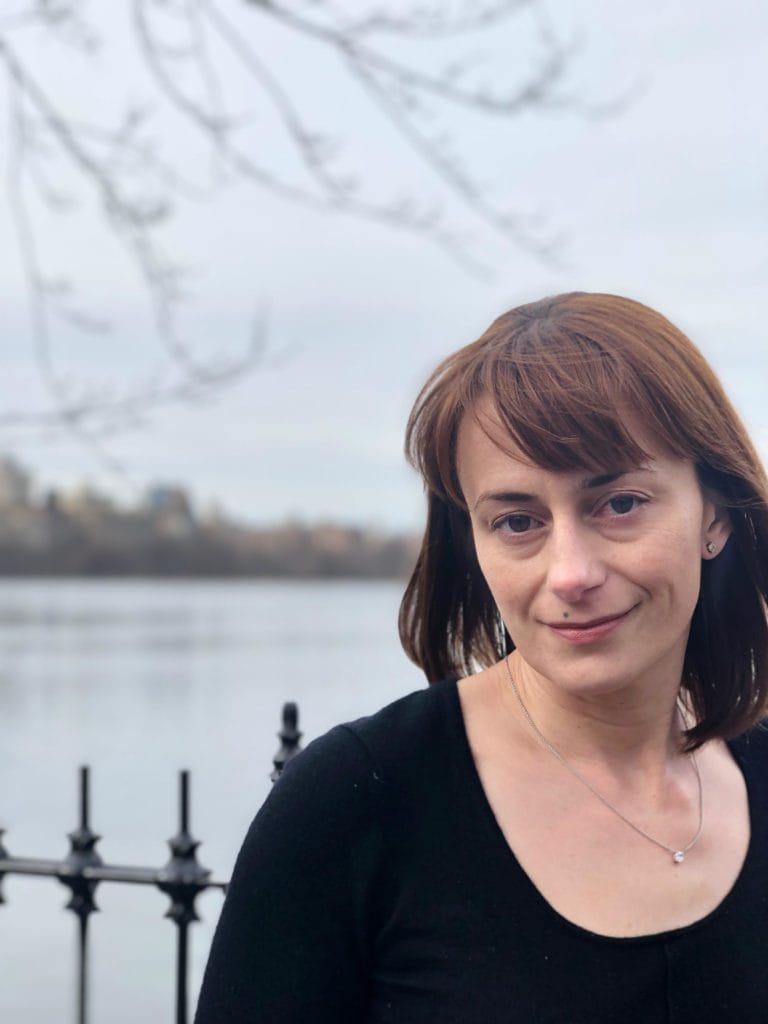
Your Calisthenics and Bodyweight Trainers

Frequently Asked Questions
Do I need calisthenics experience to start?
No. The PCC system is built on regressions, which means every exercise has an easier version. If you can't do a pull-up, your trainer starts you with dead hangs, then assisted pull-ups, then negatives, and builds from there. The same regression logic applies to every skill: push-ups, dips, pistol squats, handstands. Your first session is complimentary for new clients, so you can see where you're starting from and what the progression path looks like.
Can you build muscle with calisthenics?
Yes. Progressive calisthenics builds muscle the same way weight training does: by progressively overloading the muscles through increasingly difficult variations. The difference is that the overload comes from leverage changes and range of motion increases instead of adding plates. Gymnasts are among the most muscular athletes in the world, and their training is almost entirely bodyweight-based. What matters is structured programming with progressive difficulty, which is exactly what the PCC system provides.
Is calisthenics better than weight training?
They're different tools that build different qualities. Weight training (barbells, dumbbells, kettlebells) excels at building absolute strength and is easier to load in small increments. Calisthenics excels at building relative strength, body control, coordination, and movement skills. Most of Momentum's trainers use both in their programming because the two methods complement each other. Kettlebell swings build the posterior chain power that makes muscle-ups easier. Pull-up strength built on rings transfers directly to better deadlifts. The question isn't which is better. It's which combination produces the results you're after.
What is progressive calisthenics?
Progressive calisthenics is a structured system of bodyweight exercise progressions that takes you from basic movements to advanced skills through a series of intermediate steps. Instead of adding weight to make an exercise harder, you change the leverage, range of motion, or stability demands. A wall push-up progresses to a knee push-up, to a standard push-up, to a diamond push-up, to an archer push-up, to a one-arm push-up. Each step builds the specific strength needed for the next. The PCC (Progressive Calisthenics Certification) codifies this system, and six trainers at Momentum hold it.
What equipment do I need for calisthenics?
At Momentum, the calisthenics rig has everything you need: pull-up bars, gymnastics rings, parallettes, dip bars, and plyo boxes. Rings and parallettes are the two most versatile pieces because they allow pushing, pulling, and holding work at every difficulty level. Your trainer selects the equipment based on where you are in the progression and what skills you're working toward.
Is calisthenics good for older adults?
Yes. Bodyweight training is particularly well-suited for adults over 40 and 50 because the progressions scale to any starting point, the movements train balance and coordination (not just strength), and the joint loading is self-limiting. You'll never be crushed under a barbell. The regressions ensure you're always working at an intensity your body can handle. Grip strength, pulling strength, and the ability to control your own body weight are among the most important fitness markers for aging well, and calisthenics trains all three directly.
How often should I train calisthenics?
Two to three sessions per week is the sweet spot for most clients. Calisthenics is skill-based, so consistency matters more than volume. Your nervous system needs time to adapt to new movement patterns, and the connective tissue strengthening that supports advanced skills (rings, levers, handstands) happens during recovery, not during training. Your trainer programs your weekly frequency based on your recovery capacity and whether you're also training with kettlebells, taking classes, or doing other activities.