Mobility and Movement Training on the Upper West Side
You can deadlift twice your bodyweight, but you can't touch your toes. You stretch before every workout, but your hips still lock up after an hour at your desk. Flexibility and mobility are not the same thing, and most people only train one of them. Mobility training at Momentum Fitness builds the range of motion, joint control, and body awareness that let you actually use the strength you already have.
What Mobility Training Is (and How It Differs from Stretching)
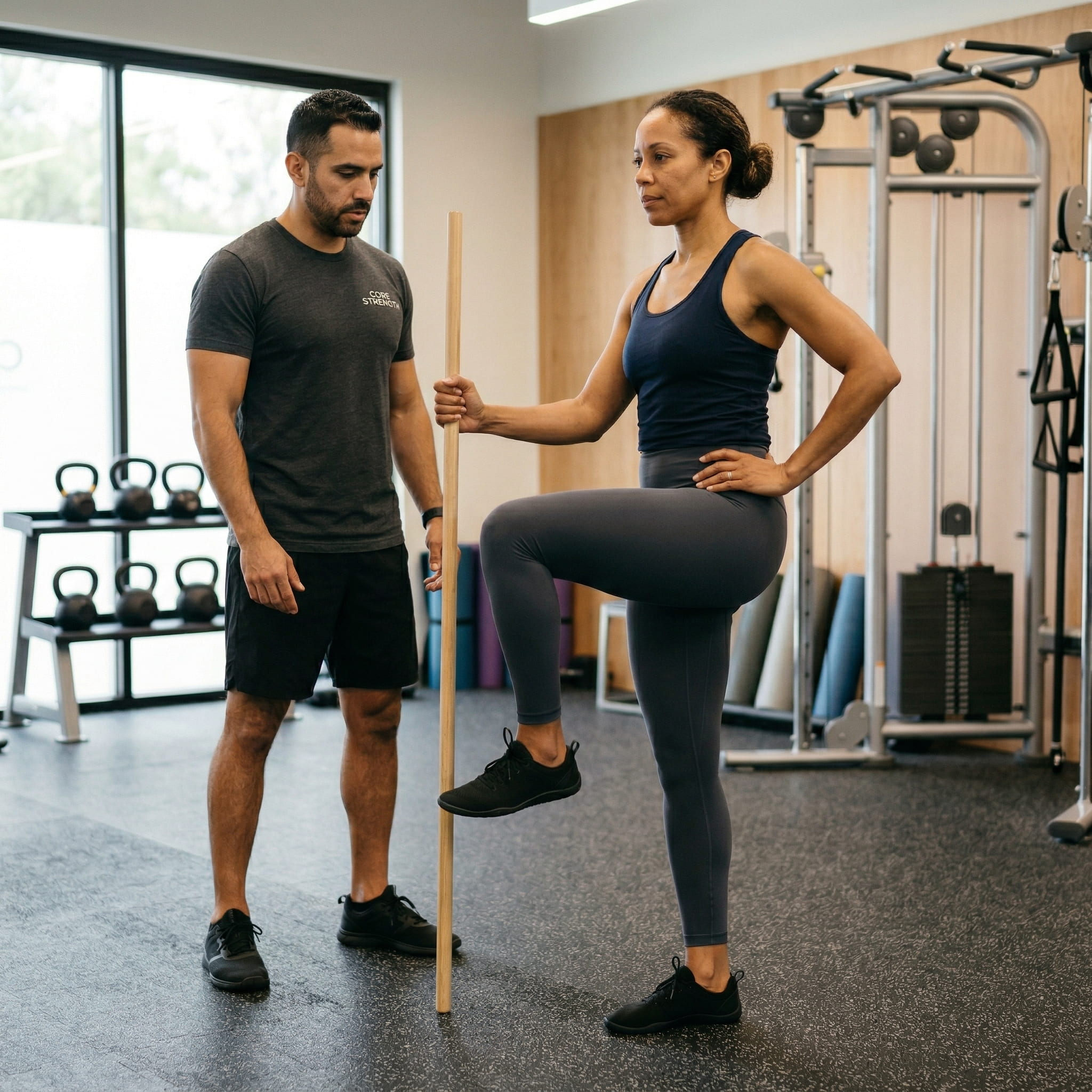
Mobility is the ability to move a joint through its full range of motion with control. Flexibility is the ability to be pulled into a position passively. That distinction matters. You can be flexible enough to do the splits while someone pushes your legs apart, but if you can't actively control that range, you don't own it. Mobility training closes that gap.
A static stretch lengthens a muscle temporarily. Mobility training teaches your nervous system to use that length. Controlled Articular Rotations (CARs), for example, take a joint through its full range slowly and deliberately, building both the range and the control to access it under load. Hip CARs, shoulder CARs, and spinal rotations are foundational drills that show up in nearly every mobility session at Momentum because they expose exactly where your range of motion breaks down.
Mobility work also includes self-myofascial release (foam rolling, lacrosse ball work, and other soft tissue techniques) to address the stiffness that restricts range of motion in the first place. Foam rolling alone doesn't build mobility. It reduces tissue tension so your body can access range that was locked up. The training that follows is what makes the new range permanent.
Momentum's trainers draw from multiple mobility systems depending on what the client needs. Stick Mobility uses flexible sticks as leverage tools to create end-range stability and strength. Animal Flow builds body control through ground-based movement patterns. Yoga develops flexibility, breath control, and body awareness through held positions and flowing sequences. FRC (Functional Range Conditioning) and Kinstretch focus on joint health, joint mobility, and active functional range of motion development at the tissue level. These aren't competing systems. They're tools, and your trainer picks the right ones based on where your restrictions are. That's what makes this movement training, not just stretching.
Who Mobility and Flexibility Training Is Best For
You work at a desk all day and your body has adapted to sitting. Your hip flexors are short, your thoracic spine is stiff, and your shoulders round forward by 3 PM. Mobility and flexibility training for desk workers addresses the specific patterns that prolonged sitting creates, not with a generic stretching routine, but with targeted joint work that reverses the positions your body is stuck in for eight or more hours a day.
You lift consistently but your squat depth stalls out, your overhead press feels restricted, and your hips feel tight no matter how much you stretch. The issue is usually not flexibility. It's that you lack the active range of motion and joint control to get into those positions under load. Mobility training builds the range you need for better squat depth, cleaner overhead mechanics, and pain-free movement through your entire training session.
You're recovering from an injury or finishing physical therapy and you've been cleared to train, but your movement still doesn't feel right. Your joints feel stiff, your range of motion hasn't fully returned, and your confidence in certain positions is low. Mobility work rebuilds joint function and movement quality so you can return to full training without compensating around restrictions.
What Mobility Training Does for Your Body
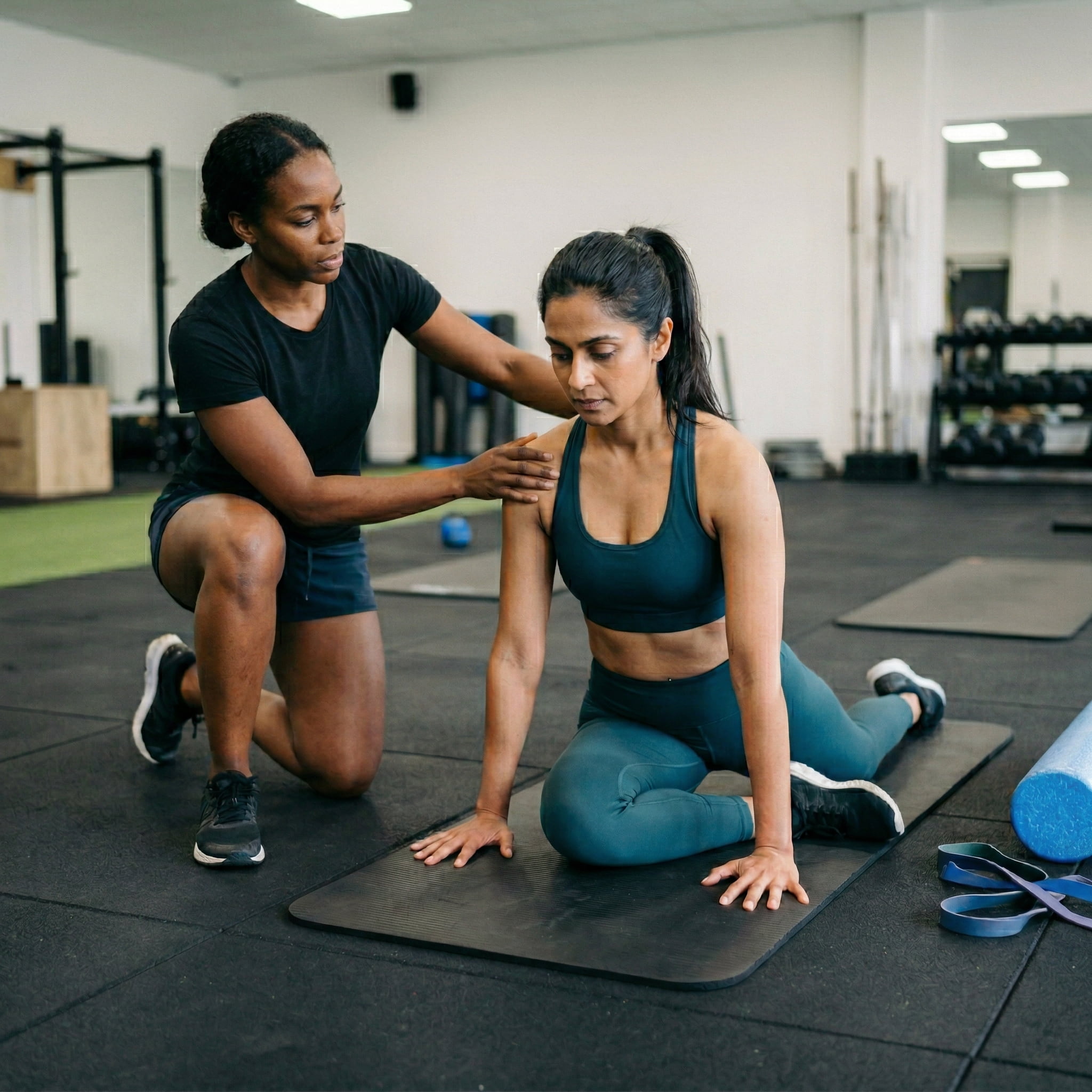
Clients who commit to regular mobility work typically notice less stiffness and improved range of motion within the first two to three weeks. That early progress comes from releasing overactive tissue and teaching the nervous system to access range it was guarding. It's not structural change yet, but it's noticeable.
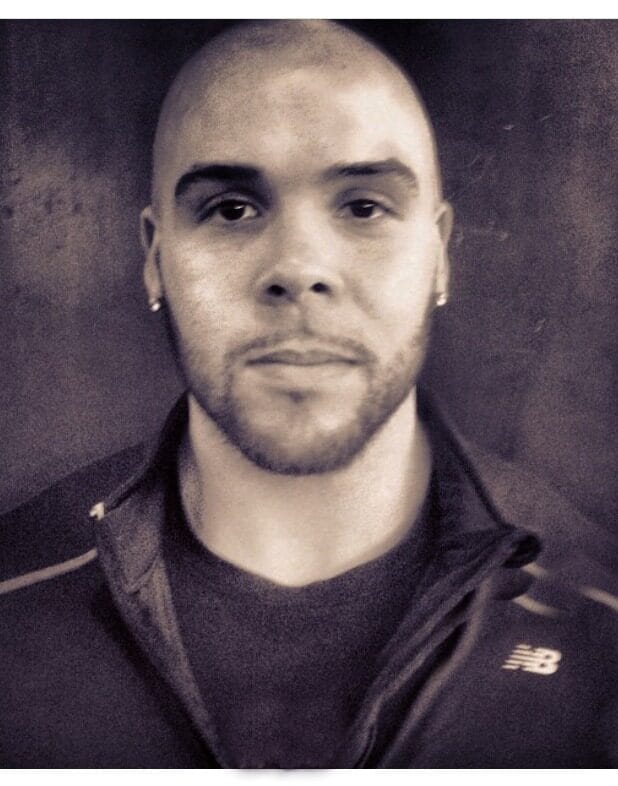
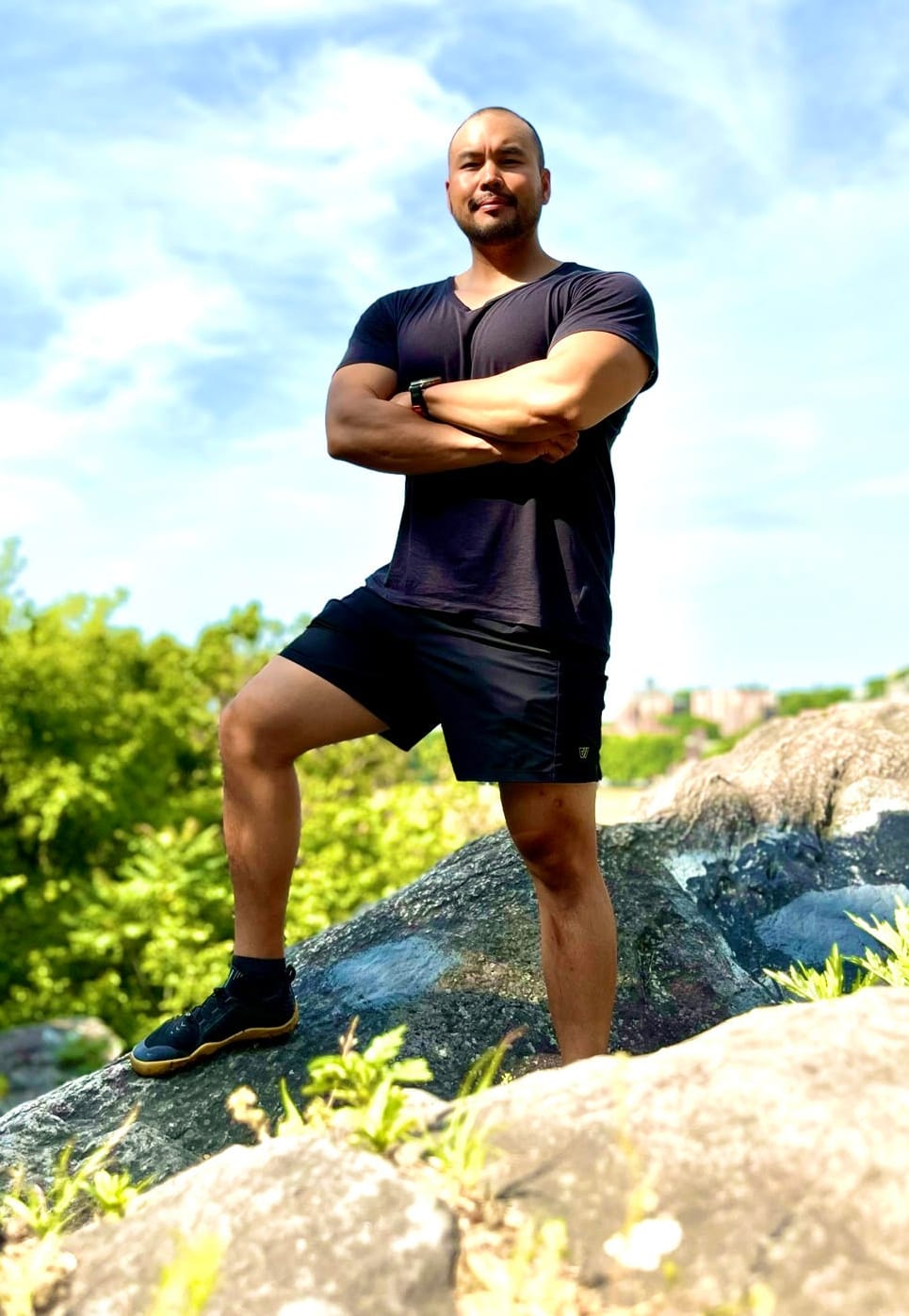
The longer-term benefits are where mobility training separates from stretching. A 2021 systematic review and meta-analysis in Scandinavian Journal of Medicine & Science in Sports found that full range of motion training produced significantly greater improvements in muscle strength and functional performance compared to partial range training. That's why Momentum's trainers don't just stretch you out. Trainers like David Tepattaporn (Stick Mobility, NASM-CES) and Marcus Tavares (FMS, TriggerPoint Therapy) use tools that build strength and stability through end-range positions, not just passive flexibility. The result is joints that move further and can handle load in those new positions.
Clients who sit at desks all day report that the afternoon tightness they've lived with for years starts to diminish once their hip mobility and thoracic spine rotation improve. Clients who train with kettlebells or barbells find that their lifts get cleaner because they can actually get into the positions the movement demands, deeper squats, pain-free overhead presses, smoother hinges.
There's a body control component that most people don't expect. Bradford Shreve's 500-hour yoga background combined with his RKC II means his mobility sessions develop balance, breath control, and spatial awareness alongside range of motion. JJ Biasucci draws from qigong and animal locomotion to build ground-based movement patterns that challenge coordination in ways a foam roller never will. For older clients, that kind of balance training translates directly into fall prevention and confidence in daily movement. For athletes, it means better proprioception and faster recovery between training sessions.
How Momentum Delivers Mobility Training
Personal training for mobility is built around your specific restrictions. Your trainer assesses how your joints move, identifies where you're limited, and builds a program targeting those areas. A typical session might start with foam rolling and myofascial release to reduce tissue tension, move into CARs, active stretching, and targeted mobility exercises (shin box rotations, wall angels, 90/90 hip switches) to build range at the joints that need it, and finish by integrating that new range into loaded movements (squats, presses, carries) so your body learns to use it. Sessions are progressive: as your range improves, the training evolves to challenge control, stability, and movement quality through that new range. Momentum's 8,000-square-foot facility on the Upper West Side has the space and equipment for dedicated mobility work that most NYC gyms can't accommodate.
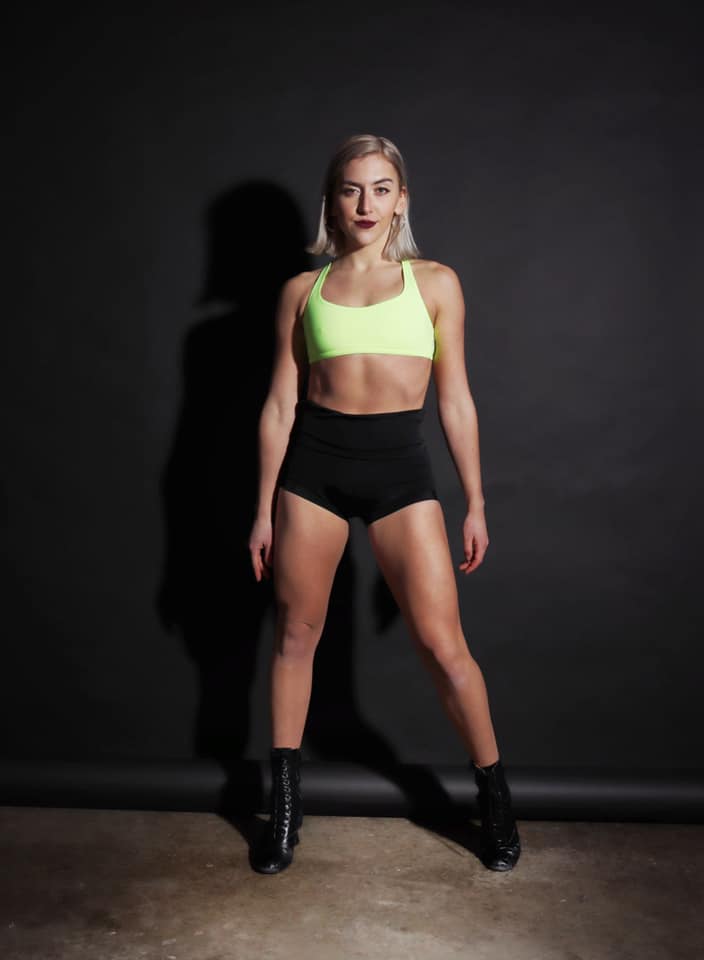
The mobility credentials on staff go well beyond a general personal training certification. Julia Chan pairs a 500-hour RYT yoga certification with the NASM-CES and Performance Enhancement Specialist credentials, bridging mobility and corrective exercise for clients who need both. Across the roster, that toolbox spans Stick Mobility, FMS and TriggerPoint Therapy, Animal Flow, FRC-informed joint work, breathwork, and thousands of hours of yoga training. When your trainer programs a CARs sequence or selects a Stick Mobility drill for your shoulder, they're choosing from specialized credentials that most facilities don't carry.
Mobility work at Momentum is primarily one-on-one, because the method starts from your specific restrictions, not a routine taught to a room. For coached group work with a mobility component, Forge w/Gabby blends functional strength training with yoga-inspired cooldown work, capped at eight to ten people so the instructor can see your movement and give corrections that apply to you.
No membership required. Buy a personal training package or a class pack. Both are shareable with a friend or family member, and neither expires.
Your Mobility Trainers







Frequently Asked Questions
What is mobility training?
Mobility training develops the ability to move your joints through their full range of motion with control and strength. It's different from stretching, which focuses on passively lengthening muscles. A good mobility program includes active range-of-motion work (like Controlled Articular Rotations), soft tissue techniques (foam rolling, myofascial release), stability training, and integration into functional movement. At Momentum, your trainer builds your mobility program around your specific restrictions, using tools from multiple systems (Stick Mobility, Animal Flow, yoga, FRC) based on what your body needs.
What's the difference between flexibility and mobility?
Flexibility is how far a joint can move passively (someone pushing your leg into a stretch). Mobility is how far a joint can move actively, with control, under your own power. You can be flexible without being mobile, and that's actually where many injuries come from: your body can get into a position it can't control. Mobility training closes that gap by teaching your nervous system to own the range you have, then progressively expanding it. If you've been stretching for years and still feel tight, it's likely a mobility problem, not a flexibility problem.
Is yoga the same as mobility training?
Yoga develops flexibility, body awareness, and breath control, all of which contribute to mobility. But yoga alone doesn't address everything mobility training covers. Joint-specific work like CARs, tools like Stick Mobility, and soft tissue techniques like foam rolling and myofascial release target restrictions that yoga poses may not reach. Several of Momentum's trainers hold both yoga certifications and mobility-specific credentials, so they can blend yoga-based work with joint-level mobility training based on what you need. For dedicated yoga sessions alongside your mobility work, Momentum offers private one-on-one yoga training.
How often should I do mobility work?
Daily mobility work (even 10 to 15 minutes of CARs and targeted stretching) produces the best long-term results. For structured mobility training sessions, two to three times per week is enough to see meaningful improvement. Many clients pair one or two mobility-focused personal training sessions with the rest of their training throughout the week. Your trainer helps you figure out the right split based on your other training and where your restrictions are.
Should I stretch before or after working out?
Dynamic mobility work (CARs, active stretching, movement preparation) before training. Static stretching and longer holds work best as a cool-down after training or on recovery days. Pre-workout stretching that's too passive can temporarily reduce force output, which is the opposite of what you want before lifting. Momentum's trainers build mobility prep into the warm-up portion of every session, so you're not stretching cold and you're not skipping it either.
How long does it take to improve flexibility and mobility?
Most clients feel a noticeable difference in stiffness and range of motion within two to three weeks of consistent work. The initial improvement comes from neurological adaptation: your nervous system learns to stop guarding certain ranges. Deeper structural changes to tissue length and joint capsule mobility take longer, typically two to three months of regular training. The rate depends on your starting point, consistency, and how much time you spend sitting during the rest of your day. Your trainer tracks progress through periodic range-of-motion assessments so the changes are measurable, not just felt.
Is foam rolling the same as mobility work?
Foam rolling is one tool within a broader mobility program. It's a form of self-myofascial release that reduces tissue tension and temporarily improves range of motion. But foam rolling alone doesn't build lasting mobility. It creates a window of reduced stiffness that you then need to fill with active movement and control work. Think of it as the first step: release the restriction, then train your body to use the new range. Your trainer programs foam rolling at the right point in the session so it feeds directly into the mobility work that follows.
Can mobility training help with back pain?
Stiffness in the hips and thoracic spine often forces the lower back to compensate, and that compensation is one of the most common sources of chronic back pain. Mobility training that restores hip rotation and thoracic extension takes pressure off the lumbar spine. If your back pain has a structural cause (disc issues, spinal pathology), your doctor or physical therapist should assess it first. For the stiffness-driven back pain that most desk workers experience, targeted mobility work at the hips and upper back is one of the most effective things you can do. For pain rooted in movement dysfunction rather than stiffness, corrective exercise may be the better starting point.
Can you do too much mobility work?
You can, but most people aren't anywhere close to that threshold. Excessive passive stretching (forcing end-range positions repeatedly without building control) can create hypermobility, meaning joints that move too far without adequate stability. The fix is simple: balance flexibility work with stability and strength training through that range. Momentum's approach to mobility always includes a control component, so you're not just getting looser, you're getting stronger in the ranges you're opening up.